Will Novosedlik’s article was previously featured in the Summer 2026 issue of Strategy Magazine.
As shopworn as it is, Marshall McLuhan’s most memorable aphorism, “the medium is the message,” continues to find relevance as we cope with the blistering pace of technological change.

Sportsnet’s NHL and Blue Jays feeds now incorporate vertical clips, rapid captions and tight player-focused framing built specifically for Reels, TikTok and Shorts.
Whether it’s the latest social app or everybody’s favourite viewing platform, whenever a new technology approaches mass adoption, it not only gives rise to a whole new set of consumer habits and expectations, but also disrupts and reconfigures the strategic, creative and production processes required to deliver the goods. Enter vertical video.
Vertical video is a format designed for a mobile-first, 9:16 aspect ratio. According to Marketing Week, for the first time, more adults are accessing content on their mobile phones than on broadcast television. A 2025 study revealed that British adults (aged 15-plus) spend an average of three hours and 21 minutes on their mobile phones daily, compared with three hours and 16 minutes watching TV.
Here in Canada, there are still more adults watching TV than consuming content online, but that’s rapidly changing as younger viewers enter the market. Younger Canadians (18–34) are driving the shift, spending roughly 35% of their viewing time on streaming services, whereas those 55 and older spend only 11%, according to Made in CA, a consumer brand advocacy group.
There’s no question that, for long-form video and film, larger screens are still preferred. But for short-form, on-the-go viewing favoured by younger cohorts, vertical video dominates. According to Alistair Leyland, CEO of fan-engagement platform developer NVRSE, “YouTube Shorts now generate more than 200 billion daily views. As boomers age out and Gen Z and Gen Alpha viewers replace them, vertical is clearly set to become the dominant viewing format.”
But it isn’t just a format shift; it’s a creative reorientation. The standard thought is that vertical video is a distribution decision: you shoot horizontal, then crop or reformat for mobile. That idea is increasingly wrong.
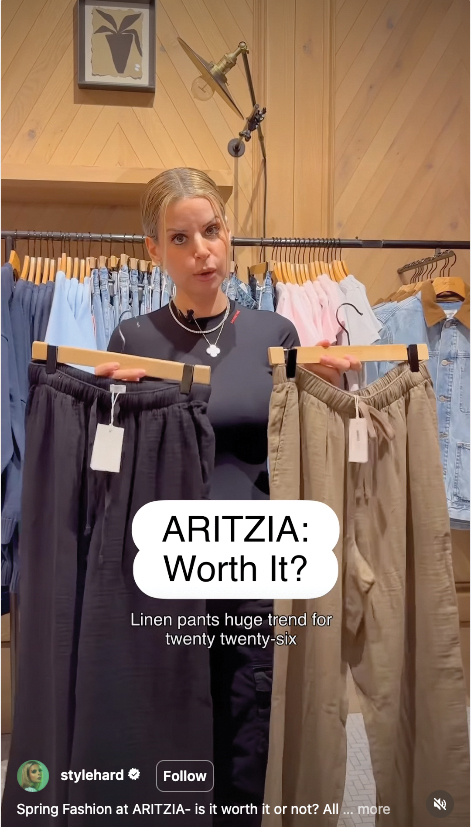
Aritzia helped prime younger audiences for vertical-first shopping culture through recurring creator-led outfit videos on TikTok and Reels featuring styling hacks and “haul” content.
Vertical video imposes its own grammar, pacing and relationship between subject and viewer. Creatively, a whole new set of constraints surrounds the vertical viewing format. Horizontal video inherited the logic of cinema and television: the wide establishing shot, the environmental context, the subject placed within a world. Vertical video collapses that. The subject fills the frame immediately. There’s no visual periphery to distract you, so you need to know what it’s about before you shoot.
The camera-facing, portrait-orientation format – which vertical video normalized – has reintroduced direct address as a dominant mode. It feels confessional, direct and unmediated. Brands that have understood this have moved away from the polished, third-person observational ad toward something that feels one-on-one. Since younger cohorts tend to value grassroots authenticity over corporate slickness, the creative challenge is to make that short content feel genuine rather than performed.
High-production horizontal TVC required a serious investment. “Vertical video inverted that,” says Katey Gault, VP strategy at UM Canada. “Overly polished content often underperforms because it reads as an ad, which triggers the ‘skip’ instinct. The creative implication is that intentional low-fi, naturalistic framing and ambient authenticity are now legitimate production choices, not compromises. That’s a real shift in how creative is briefed and how budgets are allocated.”
“It used to be that you had five seconds to establish a mood. We now believe you have roughly 500 milliseconds to stop a thumb.” Alistair Leyland
Perhaps the biggest difference is in pacing. Vertical video audiences – especially on TikTok and Reels – have developed an extremely fast editorial instinct. They’re immediately deciding, within the first one or two seconds, whether to stay.
In fact, according to Leyland, “It used to be that you had five seconds to establish a mood. We now believe you have roughly 500 milliseconds to stop a thumb.” This means that, creatively, the most interesting or surprising thing has to be the first thing you see. It’s a fundamental inversion of classical narrative advertising structure.
Developing creative within that 500-millisecond window means any key messaging needs to appear on screen all at once. This is pushing creative development toward a more editorial model: smaller, more frequent outputs, faster iteration and content that responds to this week rather than this quarter. For many marketing organizations and agencies, that’s not just a format change, it’s a restructuring challenge.
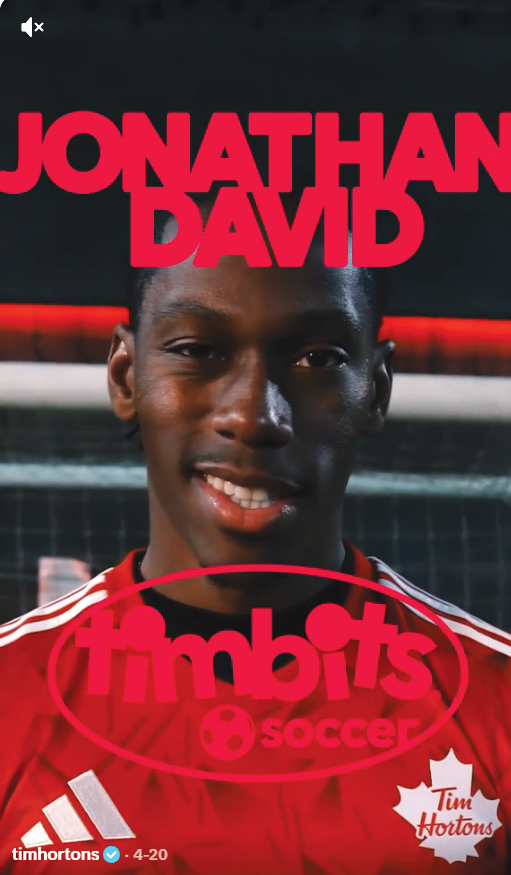
Tim Hortons has experimented with TikTok-native product marketing and creator-style storytelling for years, using POV humour, influencer collaborations and quick-cut social content designed specifically for mobile-first viewing.
“Consumers now have the control to not tolerate anything that is irrelevant to them,” Gault says. “Before, watching a 30-minute YouTube video on how to cook steak meant you would have to sit through this 10-minute preamble of how much the creator likes steaks and how they’ve learned to cook steaks before you actually even get to what you went to that video for: a sizzling, succulent steak. Now you start with it.”
So, what impact does this have on media strategy? Agencies and brands need to think about how content is made and consumed, and how they can be relevant to consumers by putting the hook up front without relying on long storytelling arcs.
The brands navigating this well tend to have brought some creative capacity in-house, built relationships with individual creators rather than just production companies, and accepted that not every piece of content needs to carry the full brand-narrative weight. The format has essentially forced a separation between “brand-building content” and “culturally present content” – and knowing which you’re making, and why, has become a core strategic competency.
“I think you have to make sure that you’re not just over-optimizing for short-term engagement,” Gault says. “You still have to strike that balance between short bursts of brand engagement and long-term brand building. It’s about balancing immediacy with memorability.”
Which brings us back to the issue of relevance. Says Leyland, “From a media buying standpoint, we hear a lot of people say we need to keep it short because attention spans are shrinking, which is true. But ultimately, the question is: how can brands meaningfully collaborate with creators and storytellers to deliver value in places where it’s going to be well received because it’s relevant to the community it’s seeking to reach?”