Chelsea Clarke’s article was previously featured in the Summer 2026 issue of Strategy Magazine.
Brands used to treat creators as the final step in the process. Once a campaign was approved, creators were brought in to help distribute it, tasked with extending reach, adding social proof and driving engagement. It was a linear model: strategy, creative, production, then amplification. But that sequence may be doing more harm than good now.
Today, consumers move fluidly across platforms, formats and communities, discovering products in fragments and validating them socially before making decisions. A TikTok clip might spark interest, a YouTube review might build confidence, a Reddit thread might answer objections and a creator mention might ultimately tip the purchase. That shift is turning creators from distributors into strategic partners.
Why creators are moving upstream
Simply put: “influencer marketing” is out; “influencer building” is in.
As Jacob McCourt, Shopify’s creator partnerships lead, says, the shift mirrors the evolution of creators themselves: “We’ve seen 1.0 creator businesses that were just building media companies, to 2.0 where they started building businesses, usually around products. Now 3.0 creator businesses are creating conglomerates, and in some cases, holding companies. The sophistication of their business is changing alongside how they collaborate.”
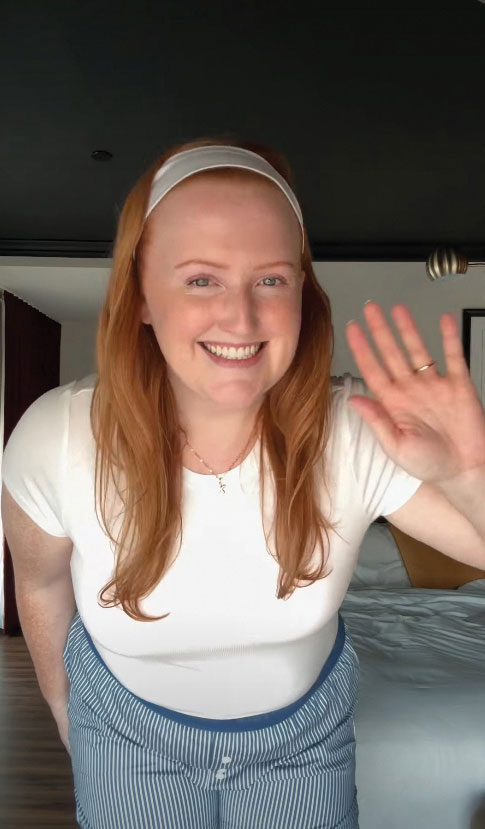
Creator Kate O’Brien was among those invited to Knix’s immersive “Period Sleep Staycation,” designed to generate content rooted in real product testing.
If creators are now operating as multi-dimensional businesses, with Goldman Sachs projecting the creator economy to reach $480 billion USD globally by 2027, it follows that their role in marketing has expanded beyond distribution.
For brands, this means that the goal isn’t reach anymore: it’s relevance. Creators are moving upstream, from execution into the earliest stages of development. The pivot is being driven by how audiences behave and how platforms reward content.
Audiences are more likely to trust personality over polish, particularly when the message is delivered in a format that feels native to the platform. When lived experience drives performance, the strongest campaigns are built around proof rather than promo.
Knix leaned into that with its “Period Sleep Staycation,” turning a product launch into something creators could experience firsthand. Instead of seeding product and hoping for content, the brand invited creators to an overnight hotel stay designed around a real consumer tension: the stress of leaks while sleeping. Creators tested the product in context, generating content rooted in firsthand use. The approach blended experience, narrative and proof. It also delivered commercially, with the product becoming a top seller online in its first week.
As Michelle Adams, senior director of brand marketing at Knix, notes, creators play a critical role in “bringing the product to life through real, authentic storytelling and sharing lived experiences, reviews and how the product fits into their everyday routines – while also feeding back to us valuable audience insights on what they want to see next.”
The Coca-Cola Company’s “World-Tested-Ready-For-Canada” campaign for Fanta Strawberry was created to travel through social, not just run on it. The product had existed globally for decades but was only just launching in Canada. Instead of positioning it as “new,” the campaign reframed it as something Canadians were “finally” getting. Creators who were already very familiar with the product abroad became central to the idea, sharing stories that others could respond to. That dynamic quickly moved beyond the brand itself, with audiences adding their own takes, reactions and experiences, turning the launch into something people wanted to participate in.
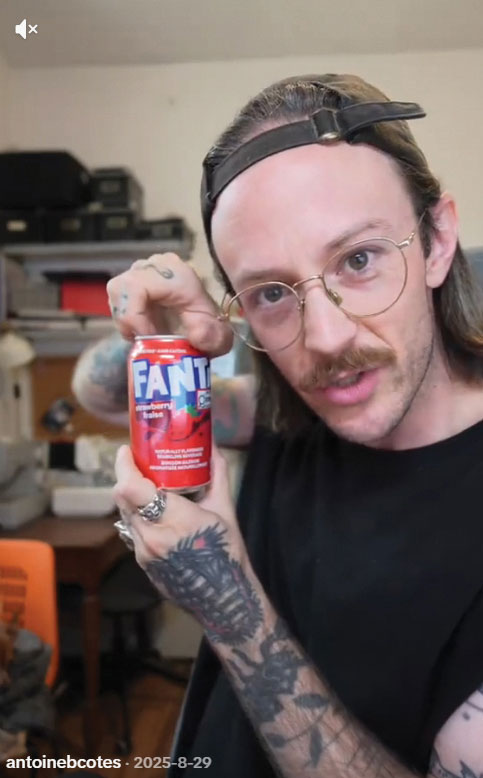
Creator Antoine B. Cotes helped introduce Fanta Strawberry to Canada by sharing the product through the lens of his own familiarity with it abroad.
Platforms reinforce this behaviour. TikTok, Instagram, YouTube and Snapchat all prioritize content that feels organic, participatory and culturally fluent. The performance gap is measurable: research from Snapchat, OMG and Eye Square found that creator-led ads capture attention 12% longer and drive 8% more play time than standard branded ads. In other words, content that feels native earns attention, while content that looks like advertising is easy to scroll past.
At the same time, culture is moving faster than traditional campaign timelines can keep up, with creators operating in real time, constantly testing, learning and adapting based on immediate audience feedback.
But optimizing for reach and relevance is only part of the story. Creators are influencing decisions that happen before content is ever made. “We tap into our network of ambassadors and creator partners at different stages depending on the product and campaign. It’s not one-size-fits-all,” Adams says. In some cases, she notes, that starts “early at the design phase, through wear testing and input on prints, colourways and product details.”
McCourt sees the dynamic playing out in how partnerships are structured. “What used to be straightforward content integrations now run much deeper, extending into consultation, co-production and even product development,” he says.
This is where creator partnerships are becoming even more valuable. The more embedded creators are in the process, the more likely the work is to land because it reflects how audiences actually think, behave and engage, not just how brands expect them to.
How to collaborate well
Brands are increasingly involving creators in concepting, tone calibration, cultural insight, storytelling formats and even product demonstration. But that only works if brands are willing to give up some control.
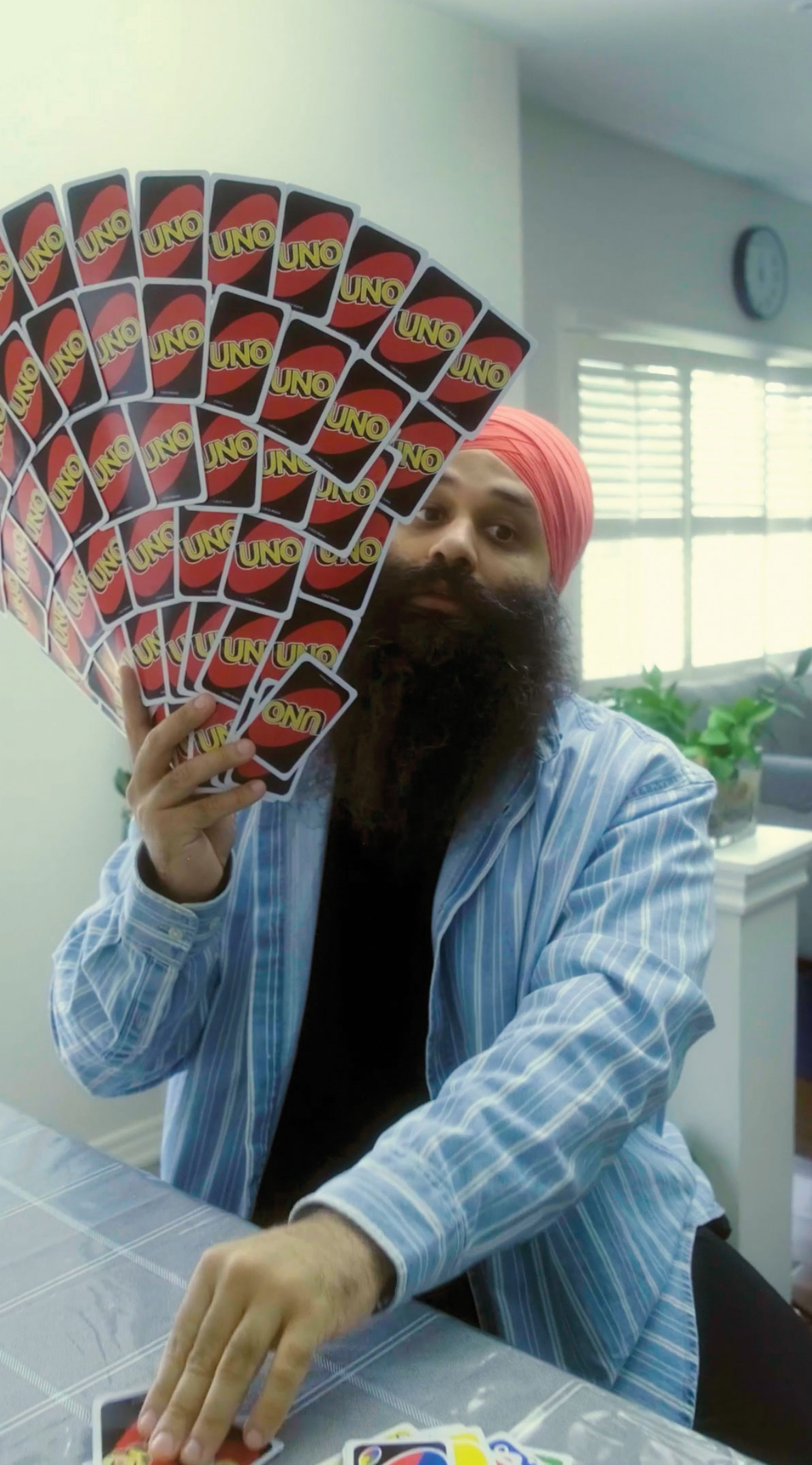
Mattel Canada built its Diwali campaign for UNO around creator Babbulicious’s established characters and storytelling style.
“Brands shouldn’t tell creators how to do their jobs,” McCourt says. “It’s important that these partnerships are true collaborations.” He describes the most effective partnerships as a balance between direction and autonomy, where brands set the parameters but don’t dictate the play: “Brands should set guardrails but give creators the freedom to do what they do best.”
Clear direction without overly burdensome control is where the strongest work happens. It’s also what allows creators to move from execution into interpretation, bringing their own voice, context and credibility to the idea.
Mattel Canada’s “Lights & Laughs” campaign for UNO is an example of what that looks like in practice. Instead of building a Diwali campaign and asking creators to deliver it, the brand partnered with South Asian Canadian creator Babbulicious and built the work around his existing characters and voice. UNO appeared naturally within family moments that felt familiar and authentic. That sense of realism drove resonance, with the campaign generating more than 3.7 million views and strong engagement. The point wasn’t just to amplify reach, but to make the campaign culturally legible.
Adams reinforces the same principle from the brand side: “The most effective partnerships come from co-creation, not control. When creators have a real hand in shaping the idea, the output feels more natural, credible and aligned with their voice,” she says. “We try to avoid over-briefing or being too prescriptive, and this approach ultimately leads to content that resonates more deeply because it’s built with the audience in mind from the start.”
What brands need to rethink now
As creators move upstream, the challenges become less about execution and more about integration. According to the IAB, 32% of marketers say finding the right creator is a key challenge, while 39% say proving ROI is the hardest part post-campaign. These concerns are real but might reflect an outdated approach.
Brands are already adapting. Many are prioritizing mid-tier creators (those with 50,000 to 500,000 followers) because they offer a balance of reach, content quality and affordability. Selection is shifting from scale to fit, with an emphasis on creators who already resonate with the product.
“Brands should go out of their way to find creators who resonate deeply with their products,” McCourt says. That means seeking creators who already engage meaningfully with the brand, whether it’s a YouTube creator organically featuring the brand’s product in their content or creators whose interests and audience naturally align with its mission. Authenticity isn’t something you layer on after the fact; it has to exist from the beginning, McCourt notes.
Measurement is evolving too. While views and engagement still matter, leading marketers are looking more closely at how creator content drives behaviour across the funnel. Snapchat, OMG and Eye Square research found that when creator ads are paired with brand ads, ad recall increases by 59% and brand awareness by 48%. Creator content also plays a measurable role in consideration and purchase, with 71% and 70% of users respectively saying it influences those decisions.
That level of impact makes it difficult to treat creators like a media line item. “The days of renting influence are over,” McCourt says. “Partnerships can’t be one-offs anymore. They need to be long-term, or audiences can see through it.”
What’s changing isn’t just where creators sit in the process, but how brands define value. When creators are treated as strategic partners rather than distribution channels, the work becomes more relevant, more credible and more likely to resonate. As brand intention and audience expectation continue to converge, the most effective work will come from those willing to close the gap together.