Photo credit: Jonas Leupe/Unsplash
This is the first entry in a series examining what key loyalty-program trends in 2026 – from AI-driven commerce to emerging coalitions – mean for brands and consumers.
By Uwe Stueckmann
Over the past year, Canada’s loyalty landscape has begun to shift rapidly, with banks, retailers and fuel brands rethinking the partnerships and platforms that underpin their rewards ecosystems.
Recent moves point to a market in flux. RBC has teamed up with Canadian Tire’s Triangle Rewards program while maintaining its relationship with Petro-Canada. Tim Hortons and Canadian Tire have linked their loyalty offerings. Shell joined the Scene+ ecosystem alongside Scotiabank, Empire, Cineplex and Home Hardware. Loblaw sold PC Financial’s banking arm to EQ Bank, while Air Canada has adjusted how status is accumulated within Aeroplan. South of the border, major brands including Starbucks and McDonald’s are also adjusting the value of their loyalty currencies.
The developments suggest a new phase of the “loyalty wars” is underway, as companies compete not only for customer attention but for control of the broader rewards ecosystem. Increasingly, the strategic question is not simply who issues the points, but who controls where those points can be earned, redeemed and surfaced across the shopping journey.
Agentic commerce was a major theme at this year’s National Retail Federation conference in New York, where Google’s partnership with Walmart highlighted how AI agents could soon help consumers compare prices, offers and rewards across retailers in real time. In that environment, loyalty programs face a new challenge: If the value of points, discounts or member benefits is not easily discoverable by these agents, it may never factor into the purchasing decision at all.
When it comes to loyalty programs in retail, agentic commerce creates interesting risks and opportunities. Programs that rely on personalized offers will need ways to surface that value to AI agents. If they fail to do so, the value will not be taken into consideration in the consumer decisioning process – and the lowest-price retailers will win. Google’s Universal Commerce Protocol (UCP), designed to make loyalty and offer data visible to AI agents, outlines how programs can surface personalized rewards. Retailers operating proprietary, coalition or affiliate programs will likely need to explore this type of infrastructure if they want their rewards to surface in agent-driven commerce.
In practice, loyalty ecosystems are becoming data ecosystems, where transaction and behavioural data are as valuable as the points themselves.
The second part of the agentic commerce revolution I see coming is interoperability. Proprietary, closed-loop rewards where value can exclusively be redeemed inside their own ecosystem will likely remain closed-loop. Redemptions create value through incrementality (redeeming for something the customer wouldn’t otherwise buy) and the emotional benefit (experiencing the reward in the context of the retailer). Other programs, however, often sit on very large, unredeemed points balances, which Bond Brand Loyalty estimated at roughly $16 billion in value. The bulk of that is attached to credit-card programs like RBC Avion, CIBC Aventura, American Express Membership Rewards and travel rewards like Air Canada’s Aeroplan and Marriott’s Bonvoy.
Credit-card rewards programs often have high unredeemed balances because redemption can be cumbersome and require customers to log into a website to complete the process. And travel programs often struggle with reward availability – particularly during peak travel periods – leaving billions of dollars in points sitting on program balance sheets. For these programs to work in the long run, customers must receive value that is truly actualized at the point of redemption.
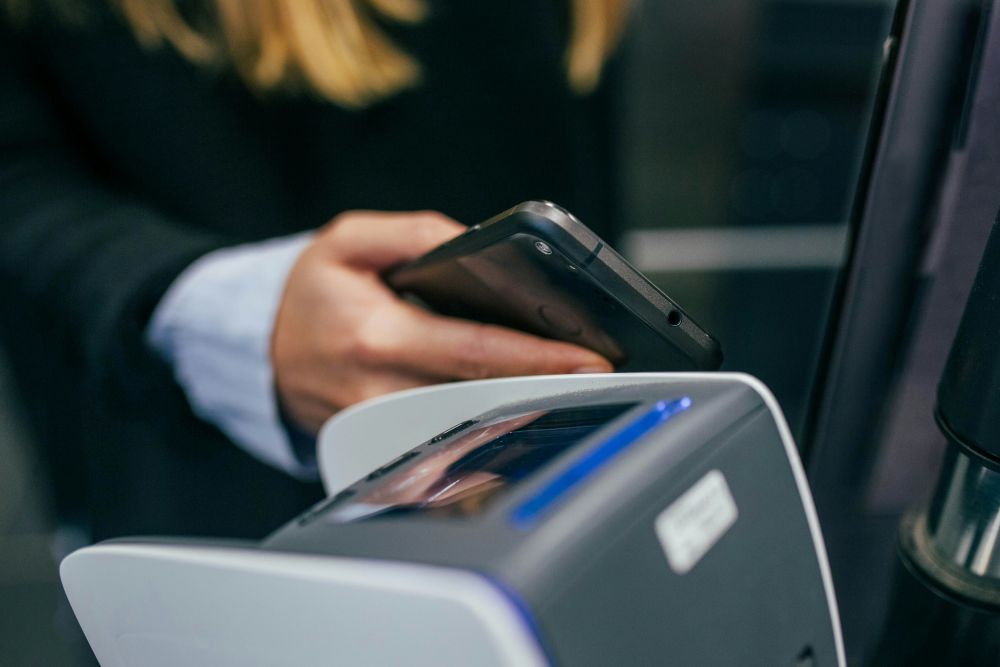
A world in which accumulated value from multiple programs can be redeemed directly at checkout – both in physical retail and e-commerce – appears increasingly likely. Amazon.com in the U.S. already allows several credit-card loyalty currencies to be redeemed seamlessly in the payment process and loyalty payment software provider Velocity Logic also allows customers to redeem their stored-points value directly at fuel pumps at thousands of U.S. gas stations. And American company Premium Paybacks is another example of frictionless application of stored points value at the point of sale.
As loyalty programs become more discoverable and interoperable, the real winners may not be the brands with the most points, but the ones that can make their rewards visible, valuable and frictionless in an increasingly AI-driven marketplace. In the loyalty wars of 2026, convenience may prove just as powerful as currency.
 Uwe Stueckmann is a former EVP of customer experience and SVP of marketing and CRM at Loblaw and VP of marketing and CRM at Shoppers Drug Mart. He is also the co-founder of Innovate Marketing, a consultancy launched last fall that focuses on AI’s effects on commerce.