IKEA Canada has opened its first Indigenous kitchen installation as it takes its nationwide reconciliation strategy into the heart of the home.
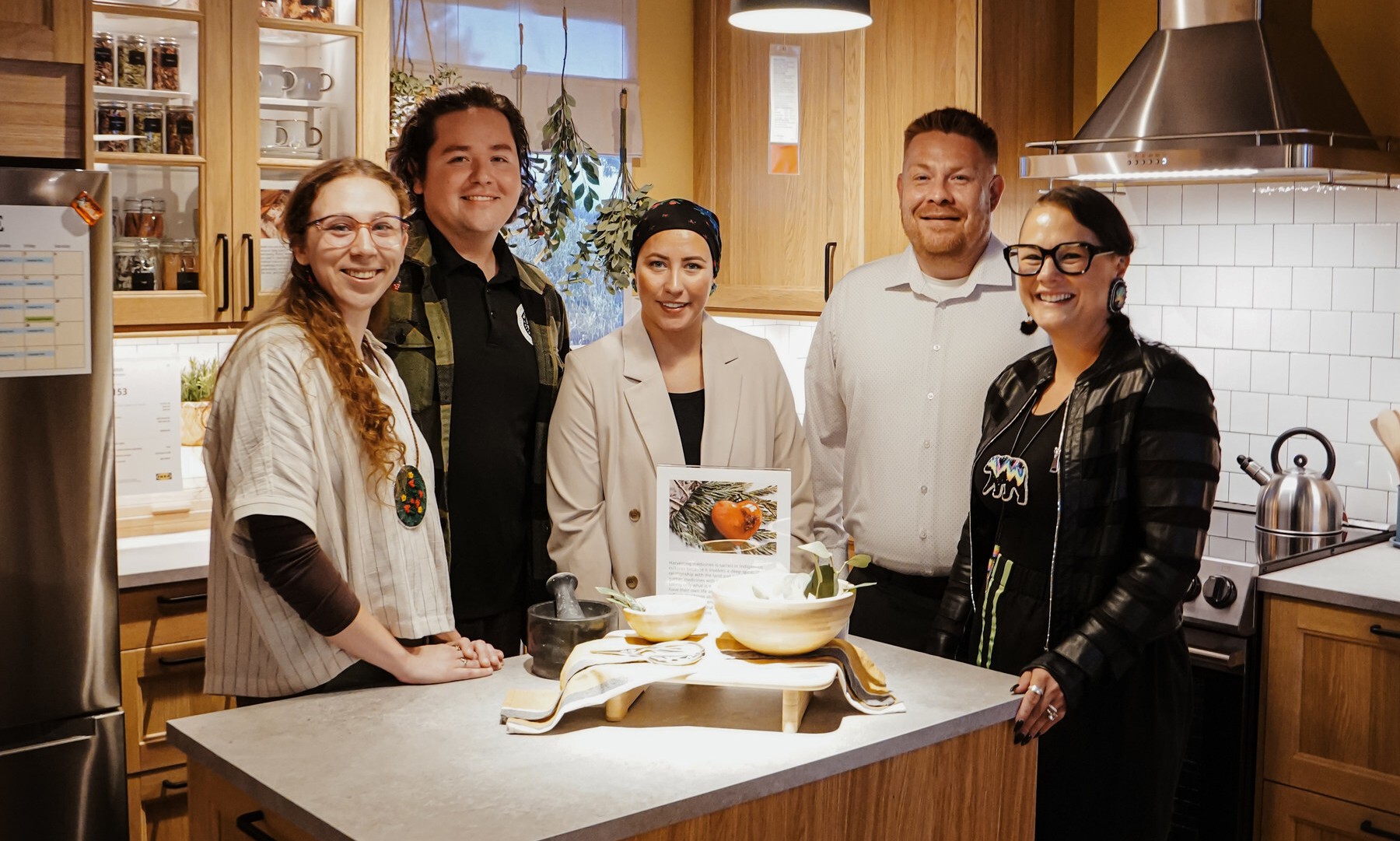
Created in collaboration with the Woodland Cultural Centre, an Indigenous-run museum, art gallery and cultural education facility in Brantford, Ont., the “Dish With One Spoon Kitchen” in nearby Burlington is IKEA Canada’s fifth Indigenous-designed installation, following spaces previously launched in Halifax, Calgary, Edmonton and Winnipeg.
Known for standardizing its showroom experiences across 60-plus worldwide markets, IKEA says the Burlington installation reflects a more locally tailored approach, with the space shaped through consultation, continuing collaboration and partnerships with nearby Indigenous communities.
 Images courtesy of IKEA Canada
John Williams, IKEA Canada’s leader of equality, diversity and inclusion, tells strategy that the work was shaped through collaboration at each stage, with the Woodland Cultural Centre playing a key role in embedding authentic knowledge into the design. IKEA employees also participated in home visits with members of Six Nations of the Grand River and the Mississaugas of the Credit First Nation to gain insights into the role of the kitchen as a gathering space, while Boom InterTribal continues to support the initiative by helping source Indigenous creators through the launch and as the installation evolves over time.
“There is no one-size-fits-all approach – each installation must reflect the diversity and uniqueness of Indigenous communities, guided by local voices, relationships and protocols,” Williams says. “While earlier spaces focused primarily on living environments, our first Indigenous-designed kitchen shifts into a space that naturally invites conversation and connection.”
Most importantly, for Woodland Cultural Centre artistic and programming director Jake Jamieson, the space reflects the cultures of the Haudenosaunee and Anishinaabe, the closest nations to Burlington, and conveys sense of “Indigenous joy.” The Burlington space features integrated hunting storage, displays of grains and seeds and storytelling rooted in the Dish With One Spoon Treaty. The teaching stems from a peace agreement among the Anishinaabe, Haudenosaunee and allied nations that emphasizes sharing, collective care and sustainability.
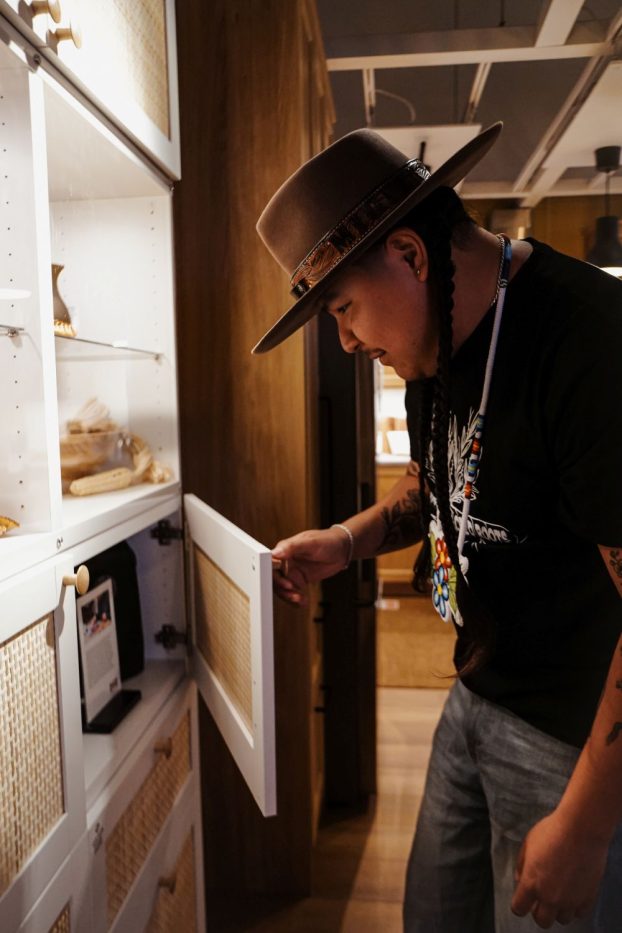 “At Woodland Cultural Centre, we teach our visitors about the history of the former Mohawk Institute residential school and its detrimental effects on our communities, but it’s very important to us to assert that those effects do not define who we are as Indigenous peoples,” Jamieson tells strategy. “This idea guided the design process with IKEA, ensuring that teams, customers and visitors see our people as resilient individuals who lead joyful lives despite our traumas.”
As one of the lead curators of the kitchen, Jamieson says the goal is for Indigenous shoppers to see themselves reflected in the space – from the moccasins placed on shelves and corn-soup recipes on nearby stoves – and for consumers to better understand nearby communities and their traditions.
“We hope that visitors walk away with a more contemporary picture of local Indigenous livelihoods,” Jamieson says. “We hope that they learn about our traditional foods, and the reciprocal respect we have for the abundances and cycles of life, specifically in the notions of the Dish With One Spoon treaty.”