At its peak in early 2025, the reaction to the U.S.’s barrage of tariffs against Canada was emotional, defiant and reflected in shopping carts, social feeds and brand messaging seemingly overnight. But like most movements powered by feeling, it wasn’t built to last in its original form.
A year into the trade war stirred up by U.S. President Donald Trump, recent analysis shows that Canada-first purchasing hasn’t disappeared, it’s matured. For marketers, that shift has implications for how, or whether, national identity should still show up in strategy.
Ipsos’s “Elbows Up to Eyes Open” report from early in the year showed that while negative sentiment toward the U.S. remained relatively stable through the end of 2025, the behaviours tied to that feeling – avoiding American brands or prioritizing Canadian ones – had softened as economic pressure set in.
After peaking at 65% in April, Ipsos’s data shows patriotic purchasing steadily retreated to 46% by December, which was close to a return to February 2025 levels when the market-research firm began tracking the consumer trend. Not all categories experienced the same drop-off, with Ipsos pointing to food, alcohol and travel as areas where Canada-first buying behaviour has proven most resilient.
“The point of view that really persisted through the year was the idea that we’ll have trouble trusting the Americans in the same way again,” Gregory Jack, SVP of public affairs at Ipsos Canada, tells strategy. “The question between what Canadians think and what they’re doing about what they think, the latter did evolve, but the former didn’t really evolve all that much.”
That gap between belief and behaviour is also being tracked by Leger, particularly once price pressure enters the equation.
“That patriotic sentiment, it hasn’t necessarily disappeared, but I think it has become more pragmatic because of rising prices and budget constraints,” Luc Dumont, SVP of insights at Leger, tells strategy. “I think what we’re seeing is that Canadians aren’t necessarily abandoning ‘Buy Canadian’ so much as they are applying that a bit more selectively than they used to. So I call it selective nationalism, because at the end of the day, at retail, price, availability and convenience, still win.”
There’s also a subtle but important reframing underway, Dumont adds. “We’re also seeing that there’s a shift, I think, in terms of whether it’s ‘Buy Canadian’ versus ‘Avoid the U.S.,'” a distinction that Dumont says helps explain why belief hardens faster than behaviour. In other words, values may be firm, but budgets are not.
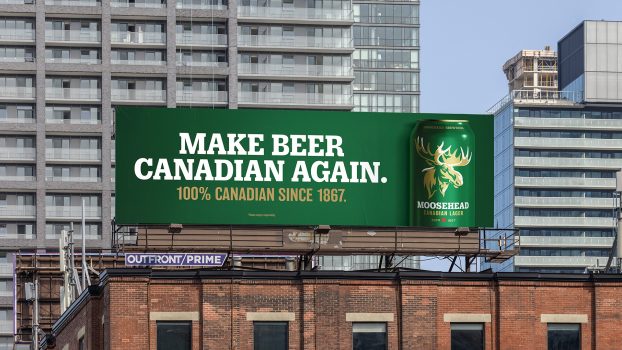
For Moosehead, the Saint John-based brewery founded in 1867, leaning into Canadian identity in 2025 wasn’t a pivot so much as a reaffirmation.
“We know that research shows that being a Canadian company has become increasingly important as a purchase driver,” says Patricia Larez, VP of marketing at Moosehead. “For us, the strategy was never about overt patriotism. It was about tapping into something deeper: Canadians trusting Canadian quality and a sense of national pride. Moosehead has always stood for these values, so leaning into them in 2025 was a natural amplification of what’s been true about us for over a century.”
Moosehead’s patriotism isn’t seasonal or situational, it’s structural. As the only major beer brand that’s 100% Canadian-owned, its identity carries credibility that doesn’t depend on the news cycle and, as Larez tells strategy, “Our Canadian-ness never feels like a marketing device – it’s our identity.”
That time-honoured status may explain why, even as the broader “Buy Canadian” moment cooled, Larez says Moosehead is continuing to see strong brand health.
If Moosehead represents the advantage of legacy, Maple Leaf Foods illustrates how more complex portfolios are adapting.
“‘Made in Canada’ still matters, but it’s evolving. In 2025 it was an emotion; in 2026 it’s heuristic,” says Maple Leaf VP of marketing D’Arcy Finley, describing a shift from emotion to efficiency. “People aren’t standing in the aisle basking in a patriotic moment, they’re trying to make a good decision in less than six seconds, under inflation fatigue, with a phone in one hand and a restless, if lovely, kid in the cart.”
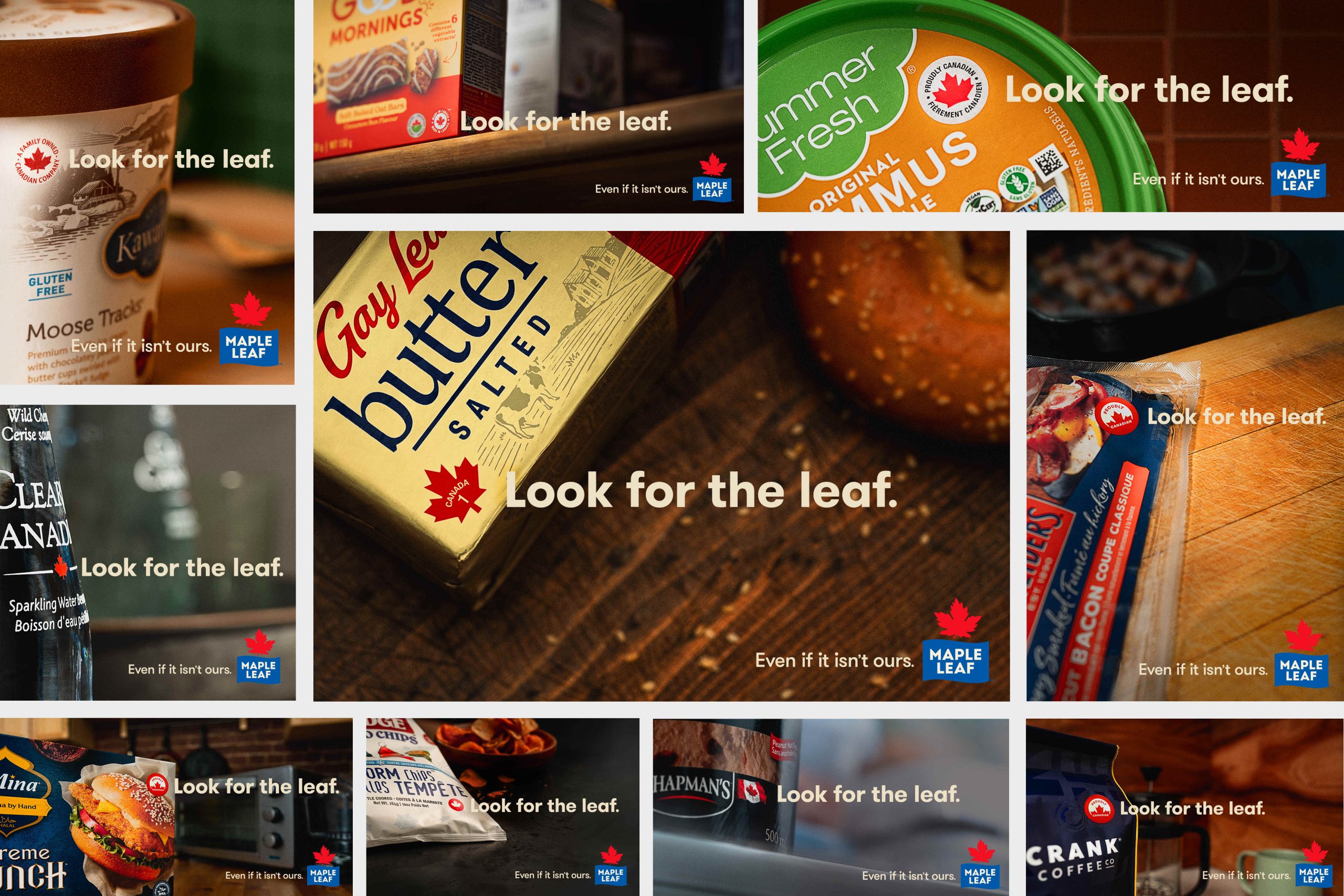
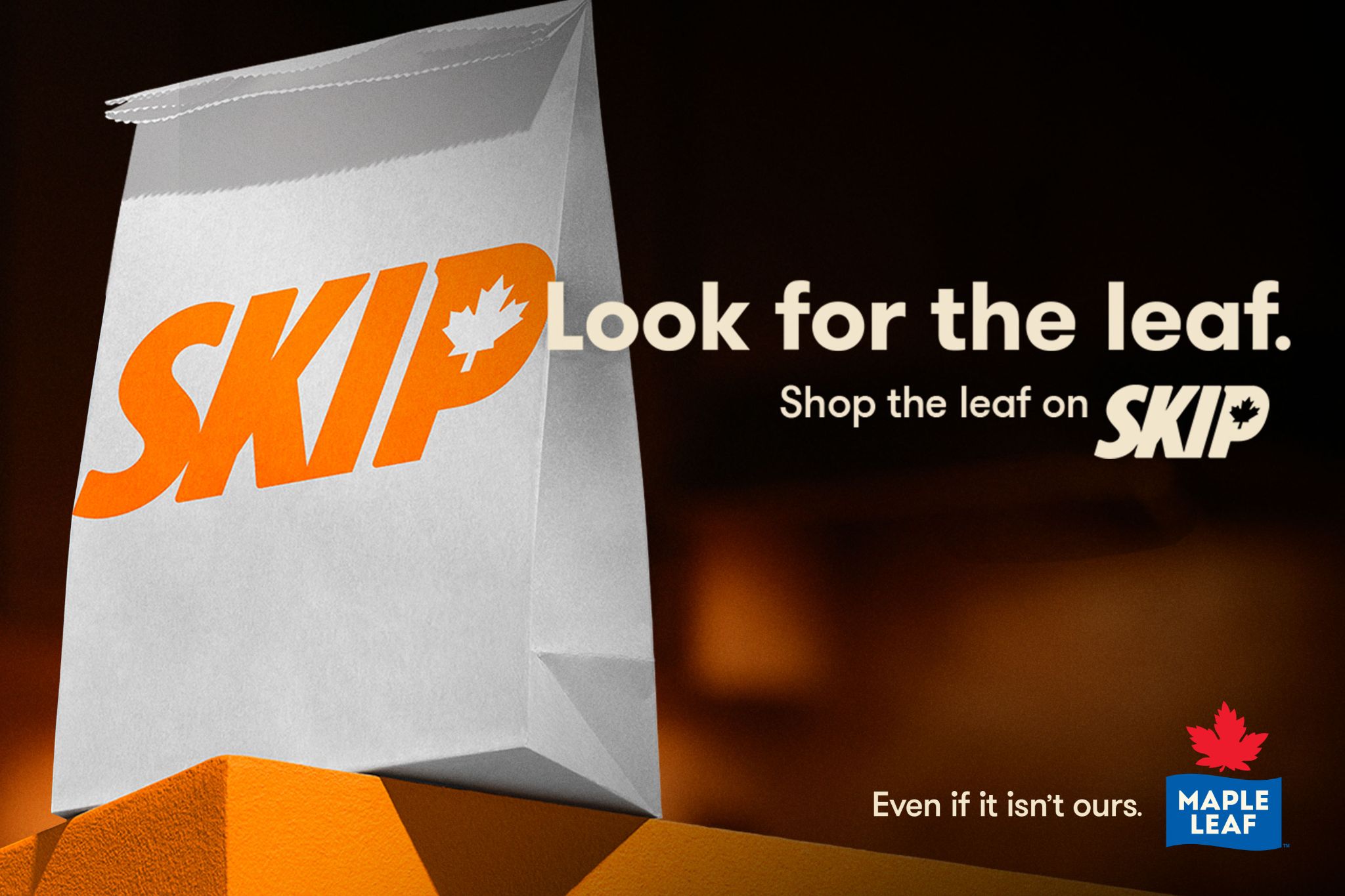
That insight shaped Maple Leaf’s “Look for the Leaf” approach, a series of campaigns by No Fixed Address that collapsed a messy set of questions about product origins into a single, visible cue that used a “Made in Canada” national symbol to highlight Canadian-owned companies. At the beginning of 2026, Finley tells strategy, that cue has evolved from “pride” to “proof,” with Maple Leaf shifting its focus toward more specificity, verifiable claims and clarity on pack and online.
“Consumers still want local. But now they want local plus receipts … confidence, transparency and consistency,” Finley says. “So yes, ‘Made in Canada’ continues to influence purchase behaviour. But the winning communication isn’t chest-thumping as much as it is friction removal. We’ll keep the emotion, but we’ll earn it with more specificity. In a pragmatic era, trust is the best kind of patriotism.”
After a year of emotional response, 2026 is shaping up as a period of readjustment. While the early burst of patriotic fervour showed just how powerful Canadian identity can be, it also revealed how quickly that emotion can give way to economics.
What remains is a higher bar. Canadians haven’t abandoned the idea of buying local, but they’ve become more selective and more skeptical.
“If you recall around Liberation Day [in April], the stock market really reacted to what the President was doing, and now, when he threatens 100% tariffs on Canada, we see very little reaction from the markets. And Canadians are the same way,” Ipsos’s Jack says. “As to what consumers might do over the next year, I can’t really say, but I think the evidence of our past survey shows that we’ve moved into a pragmatic response that isn’t necessarily susceptible to one or two things happening to disrupt the relationship [between Canada and the U.S.]. That could change if something actually materialized that was fundamentally going to impact Canadians.”