Sleep Country Canada has taken its “Stop Sleep Shaming” platform to the streets by turning one of the most relatable daily rituals of city life into a moment of brand-led empathy.
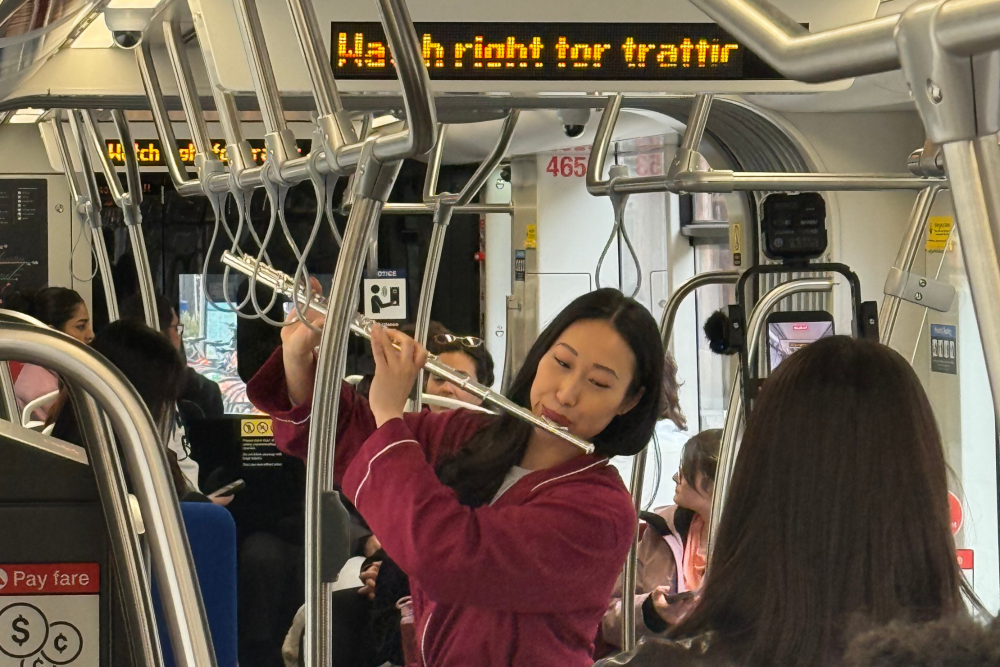
For Sleep Awareness Month, the retailer transformed a Toronto streetcar into a rolling “Permission to Snooze” zone, complete with live lullaby performances, sleep masks and travel pillows, in an activation designed to normalize a behaviour many Canadians feel quietly self-conscious about: Getting an extra bit of rest.
The idea, brought to life earlier this month in a creative collaboration between Mekanism and Heads+Tales, builds on an insight first introduced in last year’s “Stop Sleep Shaming” launch, which framed sleep deprivation, and the stigma related to getting proper rest, as a byproduct of hustle culture.
“We really fell in love with the raw ‘Stop Sleep Shaming’ insight that we landed on with last year’s campaign. And so this year was all about, how do we build on it,” says John Myhal, brand marketing director at Sleep Country Canada. “So we thought let’s go right to the heart of where people are feeling that burden, or that that feeling of sleep shaming the most, which was on transit.”
The decision to launch within the Toronto Transit Commission was backed by data. According to a new Leger national survey commissioned by Sleep Country, seven in 10 Canadians feel exhausted at least a few days per week. And of the 82% of transit riders that said they have felt the urge to fall asleep while commuting, more than half said they feel self-conscious about doing so.
Millennials and younger consumers – identified as the poorest sleepers in the brand’s research – were a key target, though the broader goal was to shift perceptions around rest for all Canadians, Myhal tells strategy. Despite 92% of Canadians recognizing sleep as critical to their health, Sleep Country’s numbers say only six in 10 say they actively prioritize it.
The streetcar experience was captured on video and amplified primarily through the brand’s social and digital channels, along with paid media tailored for platforms like Instagram and TikTok. Sleep Country also partnered with content creators to extend reach and relatability, alongside amplification through BlogTO. Media support for the activation was handled in house.
For Sleep Country, named a strategy Brand of the Year last fall, influencers play a key role in bridging the gap with younger audiences. The “Permission to Snooze” campaign also reflects a more nimble approach to production. Compared to larger-scale efforts, like last summer’s integrated “Sleep Daddy” work starring Eugene Levy, this month’s activation was executed with a more modest budget, Myhal says, allowing the team to move quickly on a culturally relevant moment while still generating scalable content.
“We certainly have a strong affinity with older generations, but in order to build that same affinity with with younger generations, we have to approach it in a different way,” Myhal says. “So this type of campaign is an important focus for us, for sure, and content creators are a way for us to build that consideration and tell a different story in platforms and in places where that key audience lives.”
Rather than driving immediate sales, the initiative is designed as a top-of-funnel effort focused on awareness, engagement and long-term brand equity. Success for “Permission to Snooze” is being measured through content engagement, sentiment and shifts in brand perception, including Sleep Country’s positioning as a category expert.
Ultimately, Myhal sees the campaign as a piece of a longer-term effort to normalize sleep in conversations around overall health. “This activation and stories like this just continue to touch on real consumer truths,” he says. “Who else is better to dive deeper into these sleep topics that we know people are having every day.”