Is it just us, or does it feel like the internet is on fire?
Google, Meta and Amazon are currently embroiled in several lawsuits across the U.S. and Europe. There’s a potential breakup of some of their businesses, and with that, implications for the way brands and agencies reach audiences. Data collection is getting more and more restricted. AI is flooding the web and creating sludge that many are already overwhelmed by. Misinformation is spiking. Moderation is rolling back.
Lawsuits, restrictions and AI chaos may feel like sparks flying in different directions, but together they point to one reality: the digital world is being rewired. The challenge now is figuring out how to reach audiences in whatever new ecosystem eventually emerges.
We turned to industry experts to find out if/how they’re thinking about what feels like a crumbling digital infrastructure, and how to prepare for future bumps in the road.
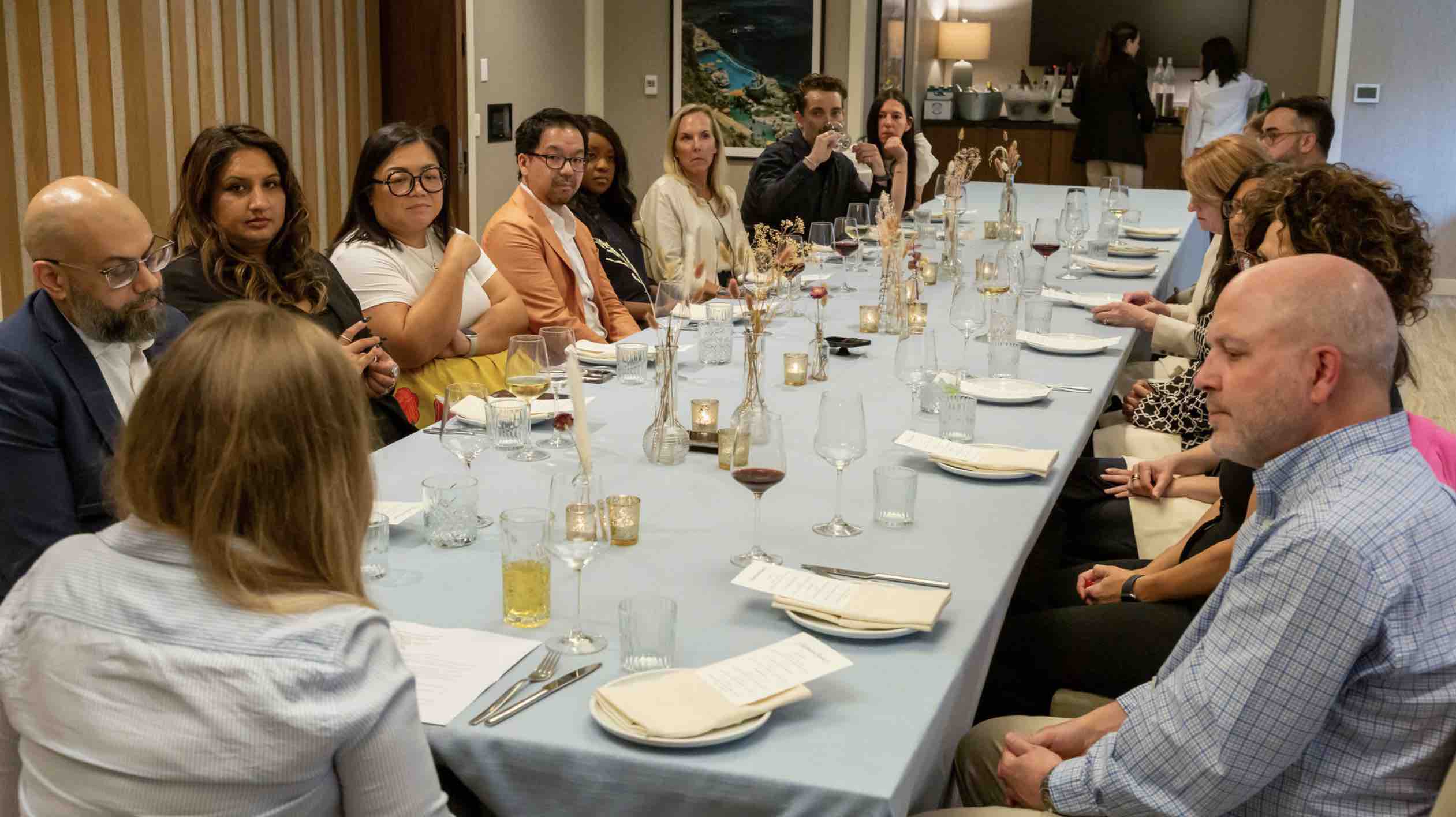
In addition to Media in Canada and strategy‘s Mary Maddever, Lisa Faktor, Jennifer Horn, Neil Ewen, Jonathan Russell, as well as the Globe and Mail‘s Penny Hicks and Tracy Day, the roundtable included media and marketing leaders:
Derek Bhopalsingh, EVP, platform media at Publicis Media; Scott Stewart, EVP, managing director, The Epitaph Group; Chimi Beaumont, VP, investment, GroupM; Kelvin Mak, VP, innovation, product, UM; Harpreet Dhaliwal, EVP, client experience, operations, Havas; Gah-Yee Won, head of marketing, Intuit; Maja Neable, SVP, CMO, TD; Julia Cooper, VP, marketing, Endy; and Amber Winters, senior marketing director, Pizza Pizza.
Here’s what they had to share in part one of this roundtable series, with more to come tomorrow.

Let’s start by naming what we’re seeing. Are there any signs of digital decay surfacing that’s impacting your business?
Derek Bhopalsingh, Publicis Media: I think decay has this negative connotation, where we’re heading into an abyss and everything’s going to fall apart. What we’re actually seeing is an evolution. And as we look at what’s coming with things like Web3, we’re also looking at how consumers are becoming more savvy and they’re demanding more transparency from platforms.
All of this is leading to accountability from a legislative standpoint. As a result of that, you’re seeing this evolution in what’s to come. So I wouldn’t necessarily make it as binary as good and bad. I would see this more as an evolution. Those of us who’ve been around a couple of cycles know that this is just part and parcel. It’s just happening way faster than ever before.
Scott Stewart, The Epitaph Group: There’s the usual platforms that we know everybody engages with, which, from a visibility standpoint, is important. But I also think about things like Discord, Patreon and Substack and all those platforms that are rapidly rising. The common theme behind them is that they’re more human and engaging. There’s a storytelling element and a depth to them. And I think people are engaging with platforms in a more intentional way.

Harpreet Dhaliwal, Havas: The conversation around attention also needs to evolve. An impression is an impression, we’ve said that for a really long time. But we’ve never really said, “Okay, what’s the alternative to that?” Because our clients will default to, “What’s the reach percentage on this?” But what does that matter if we don’t have the attention of the users that we’re trying to engage with? We can’t actually build a brand if nobody’s paying attention to it. How do we make the quality of the attention you’re getting become the thing that we trade on? We need to shift away from “get as much volume and as many clicks as you can.”
Chimi Beaumont, GroupM: For me, it’s about clients understanding what the gold standard principles are, and despite where you are, or which channel you’re looking at, or what outcomes you’re facing, you have those principles that you stick to.
Another thing that tends to happen when you become obsessed with performance is that we start driving for efficiency and that obsession can also cause us to be a bit blind to – and maybe let go – of some of those principles. For example, the brand safety elements that we usually have in place might get taken off because the performance is just so good. I think in this ever-evolving world, holding onto those key principles that protect your brand is very important.
Stewart: The only decay I see right now – and I say this as somebody who works on the agency side – is the decay of measuring success through traditional media currencies. If I’m a marketer, I’m not looking at the world top down anymore; I’m starting with the user experience. And I would be obsessed with two things right now: content and topical authority in the spaces that I’m in.

With so much in flux and transition, how are your brand and client teams scenario planning not just for today, but five years from now?
Beaumont: I would say that clients are thinking five years ahead, but then sometimes what they’re actually doing doesn’t reflect that ideology. In this economic climate that we’re in – who knows, we may eventually be in a recession – we will need to refocus and start thinking about that long-term investment and what that means for us. Whether you can stick it out and keep advertising your brand, despite all of the current hardship that’s coming. Or whether you can take the hit.
Amber Winters, Pizza Pizza: I think that’s what makes it a challenge for a brand like Pizza Pizza. The customer mindset is shifting so rapidly, and it could be a lot of macroeconomic factors that feed into that. So whether it’s the recession, politics, the Leafs winning the Stanley Cup, anything – it all feeds into the customer mindset. So it’s really hard to look at five years ahead, or even one year ahead sometimes.
Maja Neable, TD: It is also so much harder to measure long term. For example, you look at cars. How often do people buy cars? Every six to eight years? You talk to a consumer for a very long time before they are actually in the market to get that car. So it’s much harder to measure.
Stewart: The other thing is that long-term metrics tend to be more qualitative versus quantitative. And until a bank CMO has a five-year KPI in front of them, I think they’re still going to probably focus on what we can measure today rather than what we can measure over a longer period of time. As much as we’re doing work with lifetime value, I think if you miss your quarterly KPI, you’re having different conversations about brand and acquisition.

Julia Cooper, Endy: I think the rising cost of acquisition across so many digital platforms is actually forcing the brand conversation. As a marketer, I’m happy to know that that’s happening. I was hired at Endy because they never built out the brand marketing function, they didn’t need to. We are still very good at performance marketing, but eight years in, they realized that these CPMs are only getting more costly each year.
We’re gonna have to start playing that long game, and it is gonna have to be a unified funnel. It can’t be brand over here, and performance over there. I actually think these platforms are forcing that conversation and investment in a way that, when I was working in tech startups five years ago, was not the case. Getting brand dollars then was really, really hard because it was so cheap to acquire on Meta, for example, and it’s just not anymore.
Winters: It’s funny how we all have brand and performance as two pillars, but performance doesn’t mean somebody in a corner geeking out on ROAs and CPMs. It’s actually about seeing the holistic picture of a brand.

Gah-Yee Won, Intuit: We had this conversation recently about separating brand and performance again. And I was like, “Absolutely not. We are not doing this. I lived in a world where we had separate brand and performance.”
And now I’m thinking is there a way we could do it so that there’s consistency of the brand, but also a speciality in performance? I fundamentally don’t feel that brand and performance are silos. So how do we make them work together in a way that they both understand how to? It’s really tough on the marketer side.
To read on, for part two of this roundtable series.