

Women’s sports in Canada have never had this much momentum – or this much on the line.
In just two years, Canada’s market for professional women’s sports has doubled, growing from roughly $200 million to nearly $400 million, with projections to surpass half a billion by 2030.
“From Women’s World Hockey Championships to tennis to curling, TSN has always been proud supporters of women’s sports,” says Shawn Redmond, VP and GM Bell Media Sports, Canada’s leading home of sports coverage. “It’s clear that in the last few years, that momentum has surged and we could not be more excited to continue driving that progress forward and see real change happen.”
But the problem is that the audience is expanding faster than the investment.
That’s confirmed by the latest It’s Time report, a national research initiative from Canadian Women & Sport (CWS) that analyzes the growth, value and investment opportunities within Canada’s professional women’s sports market.
“When we released our first It’s Time report two years ago, there were only two major women’s tournaments in Canada,” says Allison Sandmeyer-Graves, CEO of CWS. “Now we have teams and leagues playing across the country all year long. The market has arrived. The fans are here. It’s time for advertisers to meet them there.”
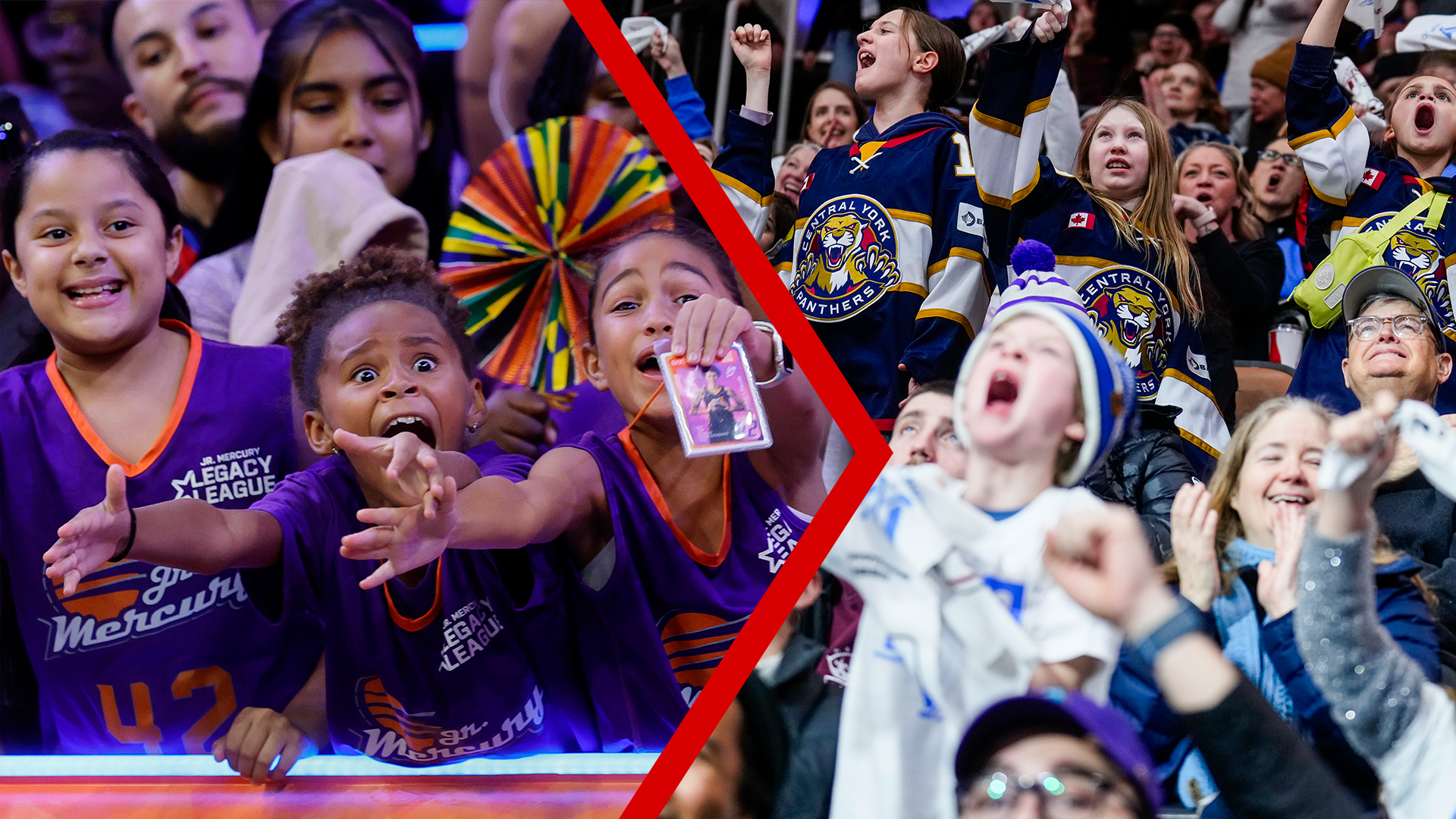
Two in three Canadians now call themselves fans of women’s sports, according to the report. These fans skew younger, more diverse and more values-driven than the national average – and they’re not passive viewers. They’re engaged consumers who follow, share and buy. The study found that, in testing, brands paired with women’s sport properties saw a 25% lift in awareness, positive sentiment and purchase consideration. And that connection runs deep: 79% of fans say they feel proud of the brands that invest in women’s sports.
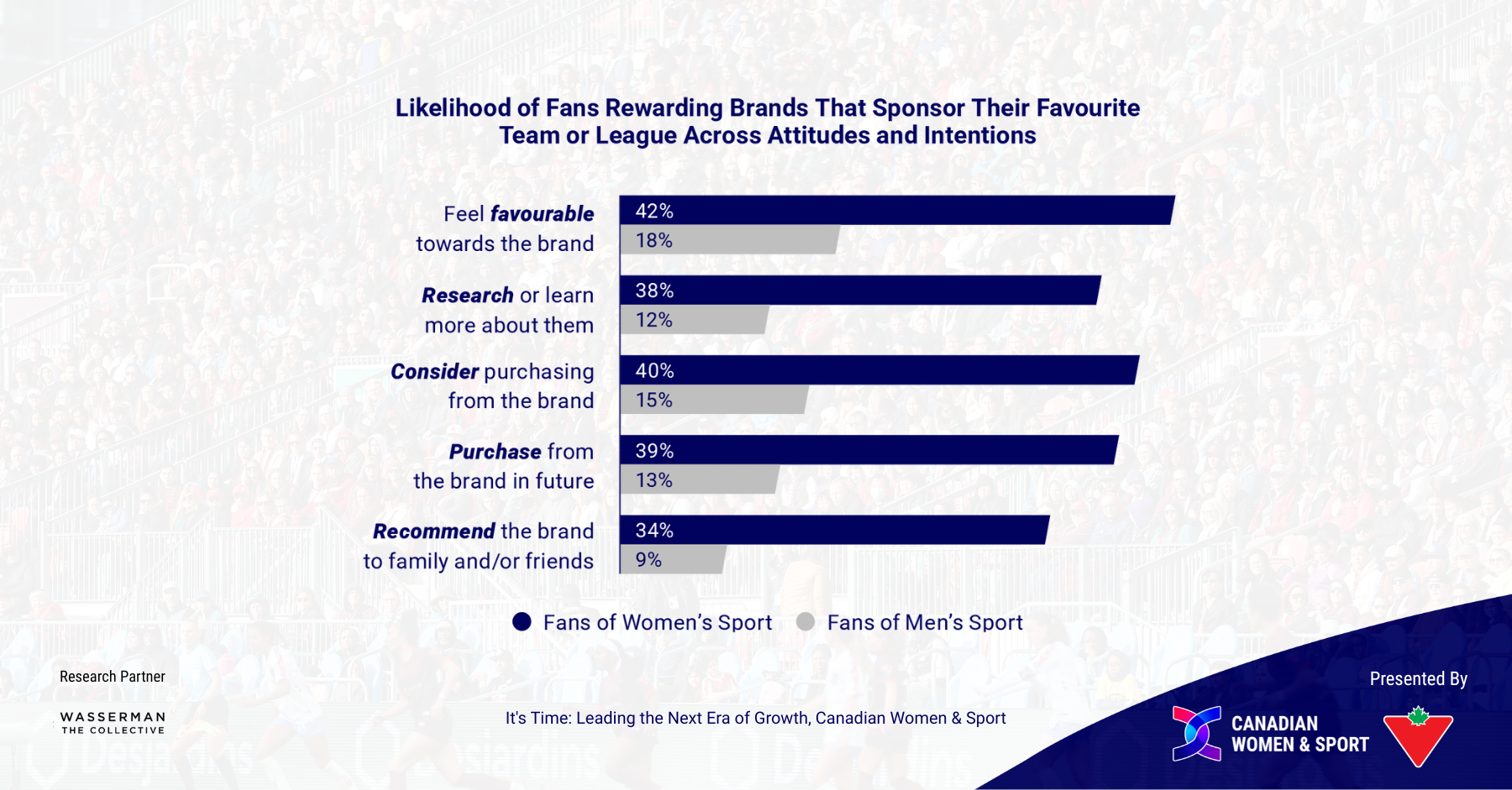
Despite this, media investment has been slow to follow. While viewership and engagement continue to climb, advertising dollars still tilt heavily toward men’s leagues, where scale and legacy make the returns easier to quantify.
“We’re still measuring women’s sports against properties that have had decades of a head start,” says Sandmeyer-Graves. “Early-stage leagues don’t scale the same way. Their value is in loyalty, engagement and cultural relevance, and that’s what builds long-term brand equity.”
It’s a familiar story for emerging categories: audiences mature faster than the market infrastructure around them. In women’s sports, that gap shows up in sponsorship deals, media buys and the metrics used to evaluate success. The result is a cycle that’s hard to break: fewer advertising dollars mean fewer broadcasts, which limits exposure and reinforces outdated assumptions about reach.
The It’s Time report notes that breaking that cycle will require a shift in how ROI is measured – one that values engagement and cultural relevance as much as impressions. Early investors are already seeing the payoff, with up to 30% lower cost per impression and stronger organic amplification through social sharing.

Broadcasters like Bell Media’s TSN and Réseau des Sports (RDS) are helping to rewrite the narrative. Through consistent, long-term investment, their coverage is turning growing fandom into mainstream visibility. “We don’t schedule a PWHL game and think, ‘We’ve got a women’s event tonight,’” says Redmond. “We’ve got a hockey game. Period.”
The commitment is paying off. TSN and RDS generate nearly four million impressions among female viewers each week, reaching one in three English-speaking women watching television in Canada. The IIHF Women’s World Championship final drew 1.6 million viewers, and the Canada-US Rivalry Series doubled its audience in a single year. During 2023’s March Madness, the women’s championship outperformed the men’s final in Canada, drawing an average audience of 236,000 and reaching more than one million viewers on TSN.
For marketers who see the opportunity, the It’s Time report offers multiple options for brands wanting to play in this space. But the first step is to be intentional. The most effective partnerships might not mean logos on jerseys or one-off campaigns, but rather, connecting brand purpose to fan values in a way that feels genuine. From there, consistency is noticed. That means showing up not only for the headline moments but for the regular season, too, while investing in storytelling, community initiatives and digital content that continues after the broadcast.
“Fans of women’s sports feel deeply connected, and they see their own values reflected in the athletes and the stories being told,” says Sandmeyer-Graves. “That’s why brands that show up authentically in this space tend to build stronger, longer-lasting relationships.”
For Bell Media, the role extends beyond broadcast. The network wants to shape how women’s sports are seen and how far they can go. “We’re past the point of asking if there’s an audience,” says Redmond. “The question now is who’s going to help build the next chapter – and who’s going to wish they had.”
Want to learn more? Download the full It’s Time: Leading the Next Era of Growth report.