The pressures facing brands today look very different from those they did a few years ago. Consumer behaviour shifts in real time, content cycles move at the speed of culture, and every marketing dollar is under greater scrutiny. Yet many agencies remain structured for a bygone era, with media, creative, commerce and measurement operating in separate silos. As marketers are being asked to deliver more, they’re seeking a clearer connection between media investment and business results.
“Clients are expected to do more with less, but they’re also asking agencies to think differently,” says Brett Moon, general manager, media at Salt XC. “They need people who can [perform] across multiple specialties, understand the business challenge and have knowledge in more places, because the market is moving so quickly.”

Salt has structured its business around this reality. One of Canada’s largest independent agencies, it connects media, retail, commerce, creative and measurement within a single operating system where teams work collaboratively rather than in silos – providing clients with more agility and access to senior specialists than traditional agency structures. The result is greater speed and accountability, with faster decision-making, more agile budget allocation, and performance insights that feed back into planning and optimization.
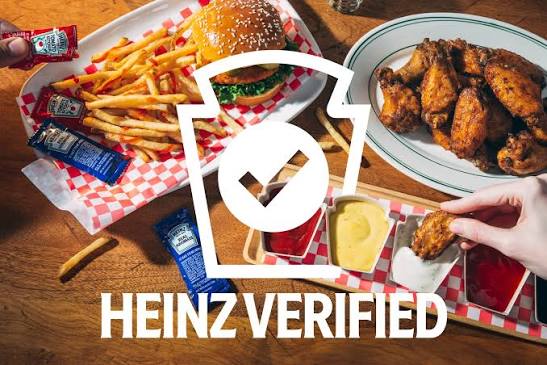 The value of that approach became clear in Salt’s work with Kraft Heinz and its award-winning in-house agency The Kitchen. As The Kitchen scaled its production of high-performing content, Salt supported their business challenge: By the time paid media could be activated, audience attention had already moved on. To solve this problem, Salt built a dedicated media team focused on content amplification – combining automation, real-time optimization and fluid budget allocation to identify and boost top-performing content in less than an hour.
“We used AI, automation and a bespoke solution to solve that challenge. We were able to take paid boosting timelines from weeks to minutes,” says Moon. “The strength of our model is its ability to adapt to a client’s specific needs.”
To support this approach, Salt has invested heavily in retail media, CRM, customer experience and AI-powered workflow automation. “These investments have allowed us to reach a scale where we can be a true contender with both clients and platforms, while continuing to strengthen capabilities in areas that are becoming even more important to marketers,” says Jil Lohnes, president of connected services. The agency’s media business currently boasts nearly 100 specialists.

Salt’s investments also extend to the technology behind its media model. Frontrunner, the agency’s proprietary optimization platform, addresses a growing challenge: As platforms roll out their own AI-powered tools, each is designed to maximize performance within its own ecosystem. “Frontrunner has become even more valuable as platforms introduce their own AI tools because

it provides an independent layer of oversight across the entire ecosystem,” says VP media Alex Buckby. “It helps marketers understand where investment should move rather than simply optimizing within a single platform.” Powered by AI and real-time bidding, Frontrunner continuously evaluates media and content performance, helping teams optimize budgets, amplify high-performing content and capitalize on audience momentum.
This approach has proven particularly valuable for clients in highly competitive categories. Since entering the Canadian market, PointsBet has had to compete against larger rivals, making precision and efficiency critical to its strategy. So, Salt built a connected media operation that could adapt campaigns in real time as audience attention, sporting events and market conditions shift. Depending on the game, series or season, teams can adjust messaging, audience targeting and calls to action while continuously optimizing performance across television, sports sponsorships, search, social and conversion-focused media, with Frontrunner helping guide investment decisions.
“As a challenger brand, we wanted to be smart with our dollars,” says Buckby. “Our media approach has been effective because we’ve built a managed system, not just a service. If we have a dollar to spend, we know exactly where to spend it with confidence.”
Cases like Kraft Heinz, and PointsBet illustrate why many marketers are reassessing traditional agency structures. When audience attention can disappear within hours, speed, connectivity and accountability become competitive advantages in their own right.
“Clients are starting with a blank piece of paper and asking what the right model should look like,” says CEO and managing partner Jeff Rogers. For many marketers, this means challenging long-standing assumptions about agency partnerships and creating new opportunities for independents to compete for business that has traditionally been dominated by holding-company networks. The question is no longer whether brands need media, creative, commerce and measurement to work together, but how quickly they can turn that alignment into measurable results.
For Salt, the answer is already in market. By connecting strategy, creative, content, media and technology with optimization in a single system, the agency is helping brands move faster and make smarter investment decisions. As media becomes more fragmented and accountability demands continue to rise, marketers may need to ask themselves a different question: Not whether their agency can execute across channels, but whether their operating model can keep pace with the opportunities those channels create.
CONTACT:
Steve Medcalf
EVP, client service & new business development
sm@ilovesalt.com
The 2026 New Collaborators:
Fo.ne.tik gets it right for Quebec
Praxis on the new credibility economy
The New Collaborators: How modern agencies are redefining partnership
If you want to read more agency profiles:
The 2026 Agency A List