Toronto is not the centre of the universe. But for some agencies and the brands they support, it might as well be.
Ryan Spelliscy is the founder and chief creative officer at Juliet. He recently took to LinkedIn saying, “Ad agencies are amazing downtown echo chambers and all too often no one working in them actually lives in the areas certain brands need to win.”
Spelliscy tells strategy that the “bubble is real,” and that the shop is consciously working to balance it through team composition.
“I’m not advocating one way or the other, but it’s wild that the ad industry is 98% one way when the ‘gen population’ is much closer to 50/50,” he says. “I don’t think that the risk is that agencies have an urban perspective…but I do think that the risk is when the urban perspective starts to become the only one,” Spelliscy says.
According to the most recent data, approximately 36% of Canadians live in or near the country’s three largest metropolitan areas – Toronto, Montreal and Vancouver.
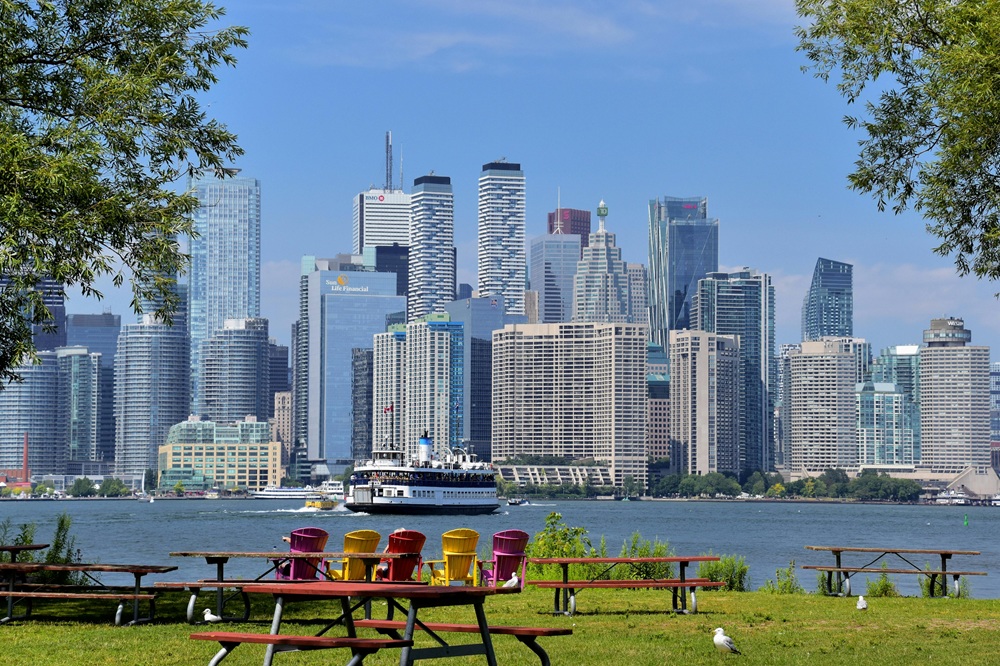
Image courtesy of Jeffrey Eisen, Pexels
“I think that, at the end of the day, advertising is being created mostly by people who live, work and socialize in similar environments,” he says, creating shared assumptions about what and who matters.
Spelliscy points to large trucks as an example of a category that might pose a relatability challenge to urban creatives who take transit, walk or bike to work. Anecdotally, he says, staffers who understand what it’s like to dig themselves out of snow drifts and navigate long commutes have an advantage when supporting those brands.
“[At Juliet] we’re now about 30% outside the city. I’d love to get it to 50%,” he says. “We’re trying to rebalance it the other way, a little bit, in terms of, ‘hey, we just want different geographic perspectives here.'”

According to Spelliscy, the urban-rural staff balance has been an advantage in the work Juliet does for Re/Max and The Keg, brands whose customers span urban markets, small towns and everything in between.
“We have all this data nowadays, we have all these spreadsheets, but you can’t really spreadsheet your way to understanding what a small town farmer or small town entrepreneur feels.”
Scot Keith, founder and CEO of Vancouver and Toronto-based One23West hails from Tilbury, a town of about 4,000 in Southwestern Ontario. He describes first moving to Toronto as though he had landed on “another planet,” but now lives both in Vancouver and in Pemberton, 150 kilometres north.
“I feel that understanding the urban Canadian and the rural Canadian has been extremely helpful in my career,” Keith says. “And we also have a bunch of people living outside Vancouver and Toronto on our team.”
As Keith notes, rural and urban dwellers both hold stereotypes. “For example, when I lived in Toronto, my Tilbury friends would roll their eyes and call it the ‘Center of the Universe.’ Toronto people would talk about people living in small towns like we were a bunch of hillbillies.”
In Pemberton, Keith cites the community’s changing demographics, from resource workers and generational farmers to people working in tourism and outdoor adventure, those who live off the land and conventional office workers, creating a range of perspectives on politics and everyday life that brands need to understand.
And despite popular sentiment, he says rural residents are not all conservative, but rather exist on a spectrum, with “probably a great deal of centrists.”
“The thing I like about my experiences living in small towns are that people tend to just tell you what they think. Whatever that may be,” Keith says.
However, he says, brands miss the mark with these audiences all of the time. He cites, by way of example, physical consumer research (focus groups), which tend to be conducted in big cities because it’s just easier.
“If you’re working on a very urban product – then of course you should focus in on that,” Keith says. “But I do think a lot of brands get it wrong when they want to talk to Canadians across the country.
“The best work we do or any marketer does appeals to both urban and small town/rural people. Based on a true insight.”

According to Jean-Hugo Filion, senior vice-president and GM, Cossette Montreal, great creativity isn’t bound by a postal code. Rather, it’s driven by strategic empathy, rigorous research and cultural intelligence. He says geography only becomes a limitation when an agency assumes its team’s lived experience represents the entire country.
“Being based in an urban center doesn’t limit your ability to connect with rural consumers, provided your strategy is grounded in real human insights, data and deep respect for the audience,” he says.
Filion cites La Maison Simons’ expansion across Canada as an example of a brand that earned its place region by region rather than taking a generic “spray-and-pray” approach. What made those campaigns succeed wasn’t just “speaking to regions,” but showing up in a way that felt authentic to people’s everyday reality, he says.
He adds that the shop’s DE&I commitment is built on concrete action and representation to help ensure the team reflects the diversity of the Canadian population, including geographic origin and regional perspectives.
“Beyond our targets, our agency culture naturally attracts and retains talent who studied, grew up or built significant parts of their lives outside major urban centers.”
-Images via Re/Max and Simons