Social-media buzz around protein-infused products is prompting real-world responses, with brands beyond traditional protein categories moving to meet the demand for fortified options.
Two of Canada’s biggest QSRs, Starbucks and Tim Hortons, recently jumped on the bandwagon. Starbucks said its response to the TikTok “#Proffee” trend was informed by Ipsos Five research showing that the share of Canadians ranking protein as their top nutritional priority had risen 112% since 2015, including a 20% increase since 2020.
Both chains are now building product lines around the trend as they join in on a strategy that’s also being utilized by brands across meat, snacks, carbs and dairy.
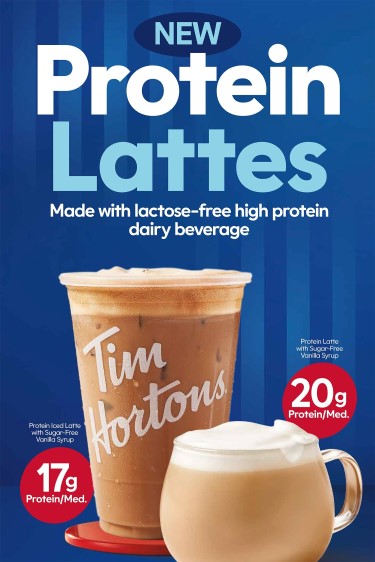 Starbucks and Tims launch ‘profee’ drinks
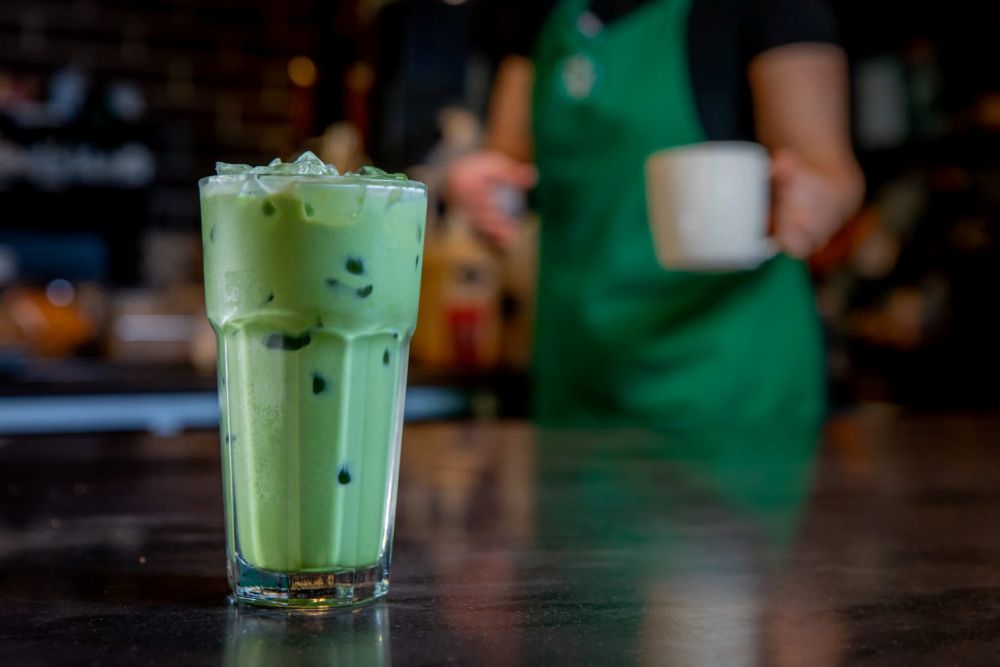
Starbucks announced Tuesday that it will launch a new line of protein cold foam and latte beverages later this month, with between 15 and 36 grams of protein per 16-ounce serving. The new protein beverages are part of a push to drive innovation and modernize the Starbucks menu, the company said in a news release.
“Our new protein beverages tap into the growing consumer demand for protein in an innovative, premium and delicious way that only Starbucks can deliver,” said Starbucks global chief brand officer Tressie Leiberman, while emphasizing the importance of “hype-worthy” menu items.
Tim Hortons arrived first on Aug. 25 when it announced regular and iced protein lattes. The Tims options, made with a lactose-free dairy beverage, include 20 grams of protein per medium 14-ounce regular latte and 17 grams per medium iced-latte. The option is also available for the QSR’s regular and iced coffees, teas, cold brews and Iced Capps.
Schneiders and Chicken Farmers tap into trend
While coffee giants are chasing demand through new beverages, traditional protein players are reshaping their marketing to remind consumers their protein-rich options.
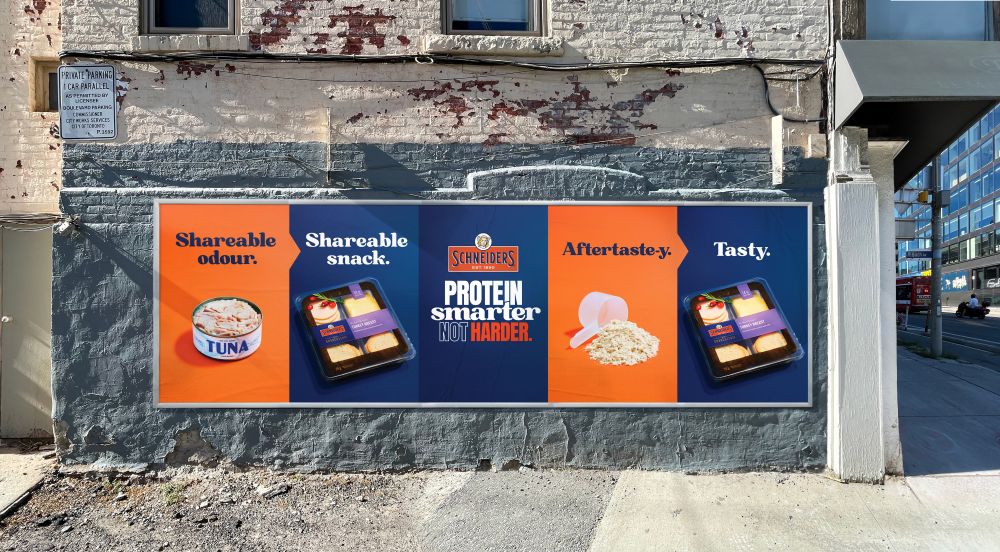
This week, Schneiders launched its “Protein Smarter, Not Harder” social-driven campaign that positions meat sticks as a viable alternative to traditional sources of protein.
The creative positions Schneiders’ products as a smarter alternative to sugar-heavy protein bars and less convenient options like hard-boiled eggs.
Earlier this summer, Chicken Farmers of Canada rolled out a campaign highlighting chicken’s protein benefits, citing Nourish Food Marketing data showing that 71% of consumers want to increase their protein intake.
Candy, pasta and bagels
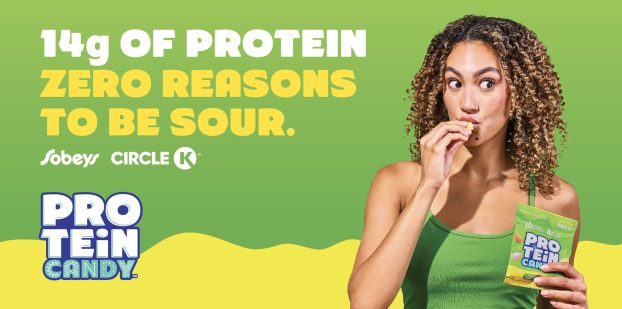
When Protein Candy launched last year, the company’s director of marketing, Morgan Kingdon told strategy that the innovation was a “gamechanger” for its ability to satisfy sweet cravings while offering lower sugar and fewer calories than protein bars.
 Earlier in 2025, Catelli unveiled its Protein+ pasta in an attempt to address longstanding category concerns that the carb-heavy food is unhealthy.
And in May, Grupo Bimbo rolled out Thomas’ high-protein bagels containing 20 grams of protein each. Bimbo president Mark Bendix said in a summer earnings call that protein-rich products “have really resonated” with health conscious consumers and those taking medications for weight loss.
Oikos and Flourish
Oikos yogurt paired high protein with high performance for February’s Pro range campaign that showcased boxers, cyclists, and gymnasts.
Aurélie Goffinet, senior brand manager at Oikos, told strategy that consumers are seeking protein in the morning especially.
The development of Oikos Pro was backed by Mintel research showing that 45% of consumers consider high protein a key factor when choosing yogurt.
Pancake-mix brand Flourish was an earlier adopter when it sought to out-protein its competition by updating packaging in March 2024 to highlight its products’ protein properties.