 Images courtesy of Alistair Leyland.
By Alistair Leyland
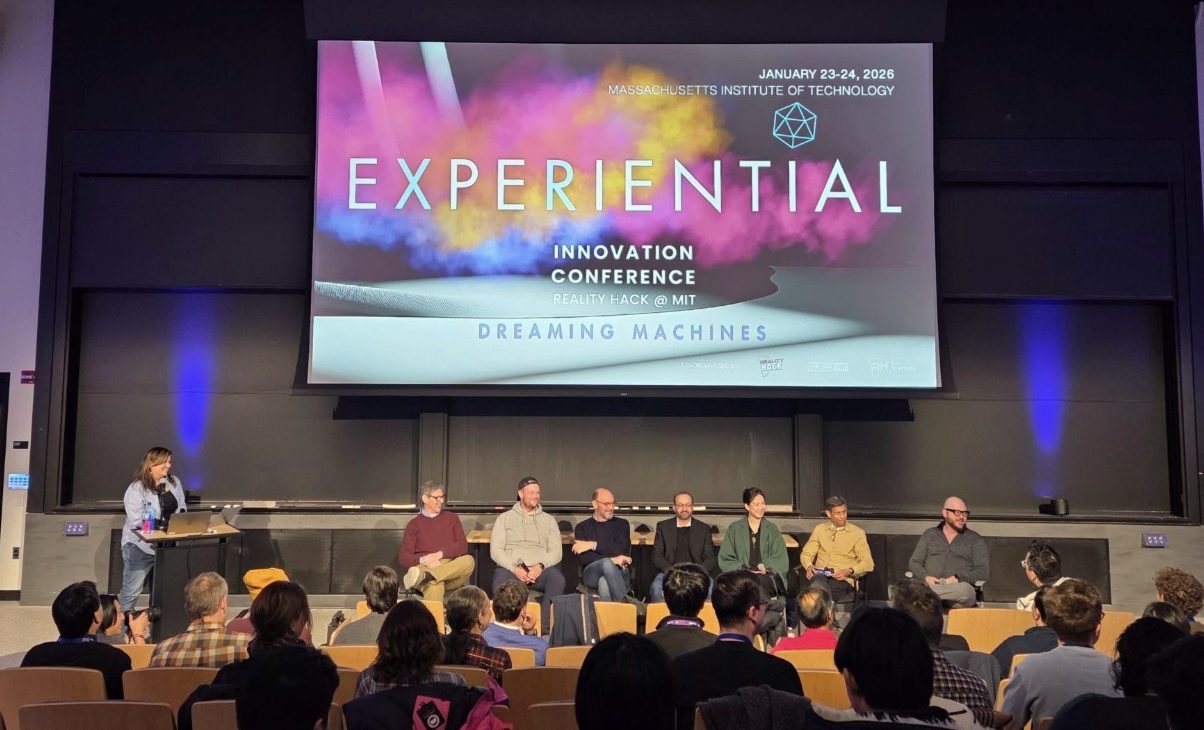
Returning to the Massachusetts Institute of Technology (MIT) this January felt different. In my third year attending and mentoring at the Mixed Reality Hackathon, also known as Reality Hack, I had a front-row seat to an event that has not only evolved from a grassroots gathering of enthusiasts into a global epicentre for the future of human-machine interaction, but perhaps more interestingly now also serves as a preview of how brands will eventually be expected to show up inside experiential, spatial and emotionally responsive environments.
This year, the scale was staggering: Nearly 700 participants from more than 50 countries descended upon Boston from Jan. 22 to 26, transforming the MIT campus into a sprawling laboratory for five days of sleepless innovation, and I wasn’t alone on this adventure. Joining me was my 3½-year-old son, Knox. Seeing the world’s largest XR hackathon through the eyes of a child who doesn’t yet distinguish between “the digital” and “the real” provided a profoundly unique perspective on the technology we were building.
The storyteller’s lens
My perspective on this event is shaped by two distinct but intersecting careers. On one hand, I am a storyteller – a director and producer of documentaries dedicated to capturing the raw, unvarnished truth of the human experience. On the other, I have spent the past 15 years as a growth driver and leader at Array of Stars navigating the volatile intersection of creative design and emerging technology.
Being a mentor at Reality Hack means serving as the bridge between a brilliant technical demo and a viable, human-centric product. I was invited to mentor because of this specific track record: the ability to help teams refine their narrative and scale their creative tech. In this context, mentorship isn’t just about debugging code; it’s about asking the “So what?” and “Who is this for?” And ensuring that the frantic energy of a 48-hour build results in something that resonates beyond the walls of MIT.
In documentary filmmaking, you look for the “soul” of a story. In my work at Array of Stars, I look for the “engine” of growth. Both speak to the discipline that brands need when working with emerging platforms: not (just) asking what the technology can do, but what it should mean.
The theme: ‘Dreaming Machines’
This year’s theme, “Dreaming Machines,” was a deliberate and poetic nod to the current state of artificial intelligence. In the world of LLMs and generative models, “hallucinations” – the moments where AI confidently veers into the surreal – are often viewed as bugs to be fixed. However, Reality Hack 2026 challenged us to view these generative leaps as a new design framework.
For Knox, this wasn’t a theory to be muddled through – it was just his afternoon. Watching him navigate rooms filled with people wearing “magic glasses” and talking to invisible entities, I realized that for his generation, the “dream” and the “machine” will be inextricably linked. For marketers, this shift signals a future where immersive, semi-surreal environments won’t feel experimental to audiences, but native, forcing brands to develop a new kind of literacy for inhabiting unreal spaces credibly, beyond rational or transactional messaging.
A new era of industry presence
The most palpable shift this year was the heavy-hitting presence of industry giants. The presence of players like Meta, Google, Snap and Qualcomm signalled that the industry is no longer in an experimental phase, and the discussion has become focused on dominance, standardization and commoditization risk.
What does that mean for brands and marketers? If everyone has access to the same tools, the differentiation moves to the story they’re trying to tell, the values they have and the restraint many will have to exercise when it comes to using these tools and environments.
Ultimately, Big Tech provides the “soil” (the APIs and the headsets), but brands and creators must provide the “soul” (the stories and the utility). If you are a brand leader, your job has shifted from “How do we use this tech?” to “How do we inhabit the user’s dream space responsibly?”
The gaming milestone: A dedicated track
For the first time in Reality Hack’s nine-year history, the event featured an official, dedicated Gaming Track. This track reflected an acknowledgment that games are the primary vehicle for extended reality (XR) adoption.
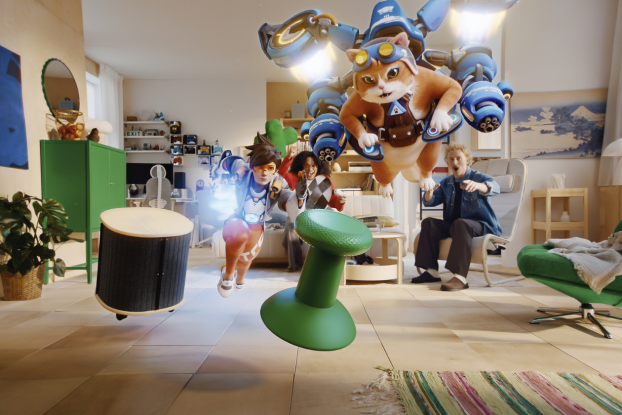
The gaming track saw 18 teams pushing the boundaries of spatial interaction. One standout project was a collaborative “ball-in-a-maze” simulator. While I analyzed the physics engine and the storytelling potential of the mechanics, Knox was captivated by the physical-digital bridge. As a producer, I saw a viable product; as a father, I saw a new way to play. It highlighted a key insight: The most successful “Dreaming Machines” are the ones that feel as intuitive as a child’s play.
Overall, the most compelling XR experiences at the Hackathon weren’t branded, but they revealed how brands may eventually need to behave: as systems that invite play, not messages that demand attention.
Mentorship in the “age of hallucination”
Mentorship at Reality Hack wasn’t just about helping teams build faster, it was about helping them decide what should be built in an era where machines can confidently invent realities of their own. I was reminded of the chilling calm of HAL 9000 in Stanley Kubrick’s seminal film, 2001: A Space Odyssey. When HAL says, “I am putting myself to the fullest possible use … ,” it resonates differently when your three-year-old is standing next to you – a reminder that optimization without judgment is not the same as intelligence.
In my decade and a half at Array of Stars, I’ve seen many tech cycles come and go, but the fusion of AI and spatial computing feels like a monolith moment – not just technologically, but culturally, for anyone responsible for shaping meaning at scale.
Key takeaway
While this year’s Reality Hack proved that we are entering the “post-headset” era of spatial computing, it became obvious that it’s just as important to remember that this isn’t about the technology alone. It’s also less about “wonder” and how the “future is magical,” but about brand responsibility. As brands move toward spatial, AI-mediated experiences, the competitive edge won’t come from novelty, but from empathy and restraint. The brands that succeed won’t be the loudest in these dream spaces. They’ll be the ones that feel human.
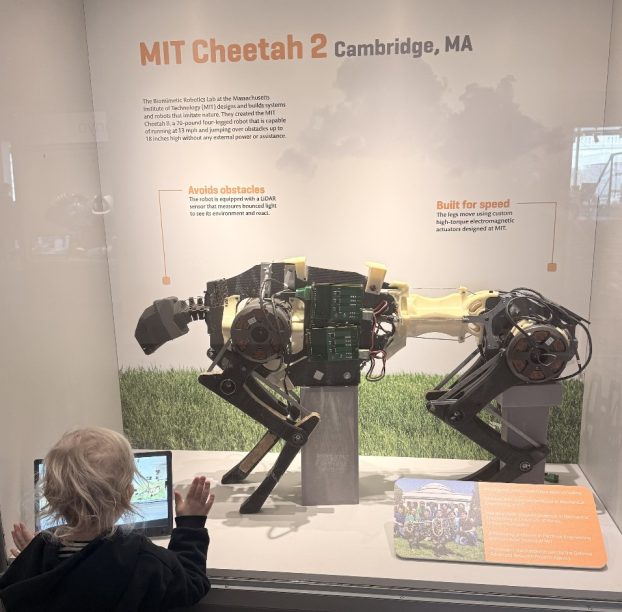
As we packed up and began what would turn into a 24-hour travel ordeal, Knox was still talking about the robots and the “magic” he saw the coders performing. He saw the teamwork, the late nights and the joy of creation. He didn’t see the “Big Tech” competition or the industry layoffs; he saw people building dreams. As they said in the 1995 film Hackers: “Hack the planet!” For Knox, the planet has just become a little bit more magical. And for me, as a storyteller and a leader, the mission remains the same: ensuring that as we build these dream machines, we never lose sight of the human story at the centre.
 Alistair Leyland is the founding partner of strategic growth at Array of Stars and is the co-founder and CEO of NVRSE, which aims to shape the next era of digital and spatial experiences.