
Few companies are as intertwined with the modern American story as Ford, from the Model T’s transformation of travel and manufacturing to the company’s enduring place in the country’s industrial landscape. But amid an era of economic uncertainty, and as diplomacy and trade degrade further as Donald Trump’s presidency continues, the auto manufacturer is extending an olive branch to its northern neighbour.
This time last year, many brands were facing accusations of “Maple washing” and were met with the wrath of Canadian consumers fed up with brands looking to cash in on “Buy Canadian” sentiment. A year and a half into tariff turmoil – and with broad 50% levies scheduled to be implemented on Canada later this month – Ford is looking to thread the needle by pointing out a long legacy in the country that dates back to the year after Ford was founded stateside, in 1903.
But rather than solely alluding to its Canadian credentials, Ford is using the “There’s No Can’t in Canada” campaign by Wieden+Kennedy to point to the investments and people behind them. A pair of 30-second hero spots link Ford’s annual employee-pricing event to its historic ties to the country along with more recent investments, such as a $5 billion promise to build out its assembly plant in Oakville, Ont.
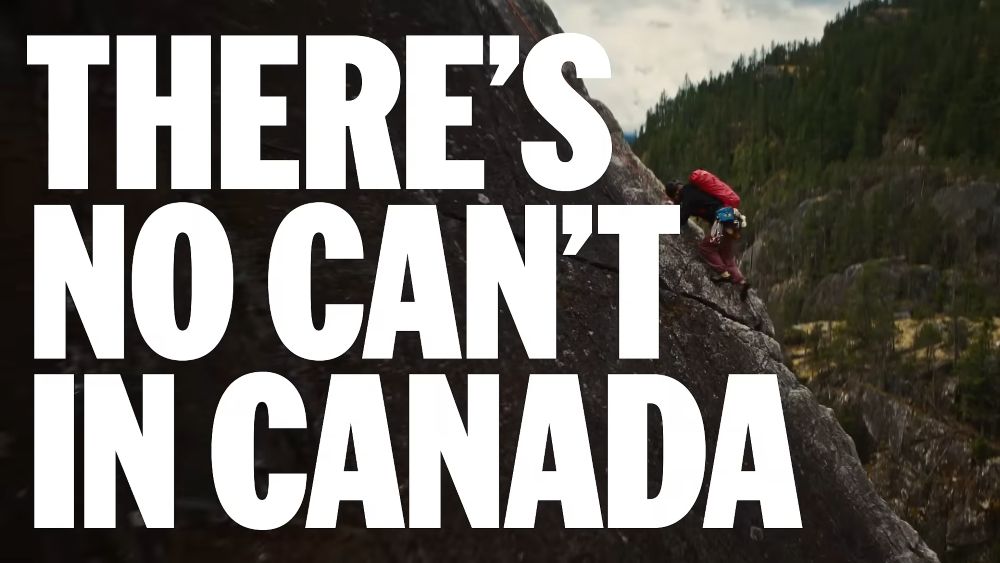 Image courtesy of Ford Canada
“There’s a real current of pride running through this country at the moment, and people can tell the difference between a company that’s decorating itself in a flag for a quarter and one that’s actually built something here,” Ford Canada president and CEO Bev Goodman said in a statement. “We’re an American company, and I won’t pretend otherwise. But we’ve been living here long enough, building here long enough, that I think of us as a citizen of this country as much as a visiting one.”
The campaign also builds on a shift in Ford’s advertising toward real customers and employees, rather than polished depictions of vehicle ownership. Goodman cites recent work celebrating the F-150 model’s 60th anniversary in the country and how “There’s No Can’t in Canada” showcases ruggedly authentic Canadian landscapes as a shift in the brand perspective.
“It’s not really a slogan, more a way people in this country already think. Something goes wrong, and the question isn’t whether you’ll fix it, it’s how,” Good says “We’ve learned that Canadians respond less to slick and more to true.”