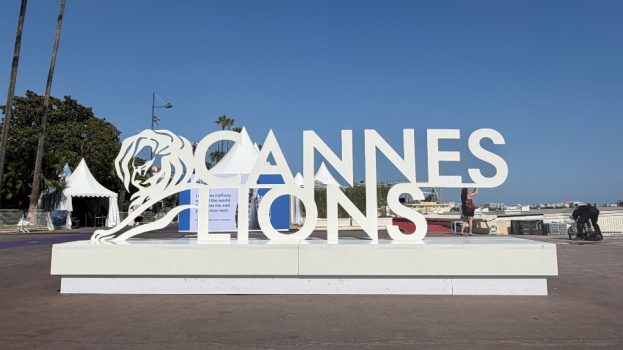
If there was one message that echoed across the Croisette at this year’s Cannes Lions festival, it wasn’t about AI. It was about people.
VML Intelligence’s latest Cannes Lions Key Trends report suggests that while AI will transform how marketing is made, it won’t replace the human qualities that make brands stand out. Instead, marketers are putting the spotlight on emotion, community, creativity and cultural relevance.
The report identifies six themes that emerged repeatedly throughout the week:
Escaping the age of beige
According to VML, marketers are becoming increasingly concerned that optimization is producing competent but forgettable work.
As AI makes it easier to generate polished creative at scale, ideas that stand out are becoming more valuable. Speakers repeatedly challenged marketers to resist playing it safe, with Orchard CCO David Kolbusz warning of a “tsunami of the mediocre” and Chipotle CBO Fernando Machado arguing that organizations need to become more comfortable getting behind ideas that might initially feel unfamiliar.
The message was simple: in a world where everyone has access to the same tools, originality is a competitive advantage.
Emotion is the human advantage
Rather than diminishing the value of creativity, VML says AI is increasing it.
Across the festival, marketers returned to storytelling, empathy and emotional connection as the qualities that separate memorable brands from forgettable ones. Lion of St. Mark recipient Susan Credle urged the industry to rediscover joy in advertising, while former P&G global marketing officer Jim Stengel argued that people remember how brands make them feel, not what they say.
Even Google’s DeepMind CEO Demis Hassabis acknowledged that AI still struggles to make genuinely novel creative leaps, reinforcing the idea that the tech may accelerate execution but not replace the human imagination.
The report points to a growing belief that optimizing every interaction can produce increasingly generic brands, while a little friction can create stronger emotional engagement.
Brands are learning to speak fandom
The report also points to a continued shift away from mass messaging toward intelligent community building.
Instead of asking what brands want to say, marketers are increasingly asking what consumers want to say about brands. That means giving fans, creators and communities more freedom to participate, reinterpret and shape those brand stories.
Examples discussed during the week ranged from Sega’s approach to reviving Sonic the Hedgehog via fan participation to creator partnerships that prioritize authenticity over tight creative control.
Friction is making a comeback
For years, marketers have focused on removing every possible point of friction from the customer journey. VML suggests that thinking may be changing.
Rather than treating efficiency as the ultimate goal, many speakers in Cannes argued that moments of effort, discovery and participation can make experiences more memorable. The report points to a growing belief that optimizing every interaction can produce increasingly generic brands, while a little friction can create stronger emotional engagement.
It’s not about making experiences more difficult. It’s about recognizing that convenience isn’t always the same as value.
Purpose grows up
Purpose was another topic undergoing a reset. Rather than debating whether or not brands should have a purpose, VML notes that discussions focused on how purpose should show up. The strongest examples highlighted companies embedding their values into products, policies and business decisions instead of treating purpose as an advertising campaign.
It’s a shift that reflects a broader expectation that consumers judge brands less by what they say and more by what they consistently do.
Consistency creates legacy
Finally, the report highlights a renewed appreciation for long-term brand building.
Several speakers argued that marketers have become too quick to abandon successful platforms in a never-ending pursuit of novelty. Strong brands, they suggest, aren’t built by chasing every cultural moment but by creating familiar ideas that evolve over time.
KitKat’s Grand Prix-winning ” KitKat Heist” campaign was held up as an example, showing how a decades-old platform can still feel contemporary when applied in fresh ways.
Taken together, VML Intelligence’s trends report points to an industry becoming more optimistic about the possibilities that come with AI, while also becoming a little clearer about its limitations.
Turns out that, as technology makes marketing faster, cheaper and easier to produce, the qualities that will make brands stand out may be the ones that have always mattered most: creativity, emotional intelligence and the confidence to stand apart from the crowd.