As this year’s Cannes Lions festival wound down, Thinkingbox CEO Amir Sahba reflected on how much the event has changed over the course of his career. What was once primarily an industry gathering has evolved into a showcase for the world’s biggest platforms, where companies like Google, Meta, Pinterest and Adobe are building their own brands as much as they’re doing business.
That same transformation is reshaping the agency business. In conversation with strategy, Sahba discusses how the agency model is evolving, why Canada risks falling behind and how his agency is building for a future where strategy, creative and production work as one.
 There was a time when the biggest presence at Cannes belonged to the agency holding companies. What’s changed?
Exactly. The biggest houses were Havas and WPP. Then it became CBS, Wall Street Journal and the companies buying and selling media. Production companies had their moment.
Then Facebook and Google arrived because they were trying to play in the media space. As soon as they were able to dominate media, they didn’t really need to sell from that perspective anymore.
Now, when you look at Pinterest House, Google House, Meta House or Adobe House, yes, B2B is still important to them, but they’re also aware that this is where their brand needs to show up. It’s almost like Coachella or the Super Bowl. They understand the value of their own brand presence.
You’ve argued that the traditional agency model no longer fits what clients need. What’s changing?
I’m not going to pretend that I’m some kind of oracle and know all the answers. Thinkingbox has always been the black sheep in the Canadian market when it comes to where we believe the industry is going. The U.S. is shifting toward what we’ve been saying, but Canada is still very much in a model driven by creative and concept first.
In many markets it’s idea first, production second, delivery third. In Canada, it sometimes feels like it’s idea first and everything else doesn’t matter. There are still people in our industry who genuinely believe that as long as the idea is good, anybody can produce it.
As agencies, we have to realize ideas aren’t just marketing anymore. They’re user experience. How people feel about your brand is becoming more important than simply how you tell the story.
You’re seeing the opposite now. The holding companies are investing differently. Rethink has a chief production officer. VaynerMedia is putting production at the centre of its model.
Agencies are recognizing that ideation and execution have to work together. A strong idea without strong execution simply isn’t interesting anymore.
I don’t think the industry is necessarily getting it wrong. It’s more like learning to ride a bike you’ve never ridden before.
For 60 years agencies outsourced production. Now they’re saying they’ll bring everything under one roof overnight. It’s the right strategy. Execution is going to be much harder. Like learning to ride a bike, you’re going to fall a few times. The question is whether brands will tolerate those falls, or whether agencies that already have the muscle memory to deliver production, creativity, strategy and execution together will win.
Has Canada been slower to embrace that shift?
I think that’s fair. Media.Monks started moving in this direction years ago. WPP and Omnicom announced major changes two years ago.
Canada has given me incredible opportunities and I’m proud to work here, but this is one area where we need to think in months, not years. We’re already seeing U.S. agencies taking Canadian business.
When you look at Wieden+Kennedy, Monks, Battery and others, they’re coming in and winning major AOR assignments that might once have gone to Canadian independents.
The lines between advertising, retail and customer experience have basically disappeared.
Exactly. There is no longer above-the-line and below-the-line. Everything is connected. It’s not simply that an idea has to translate everywhere. The brand story has to drive the 30-second commercial and everything that follows. It can’t be handed off to somebody else.
Traditionally, the lead agency focused on the top of the funnel and everyone else inherited pieces of it. Now brands want one agency to own the whole story.
It’s not simply whether the idea works across channels. Can it live at POS? Can it work in retail? How does it show up on packaging? How does it translate into customer service? All of those things need to connect back to the original idea.
You see that here at Cannes. When Meta creates an experience, they’re showing physical products, digital products and brand storytelling that all feels connected.
As agencies, we have to realize ideas aren’t just marketing anymore. They’re user experience. How people feel about your brand is becoming more important than simply how you tell the story.
So clients aren’t buying channels anymore. They’re buying stewardship of the brand.
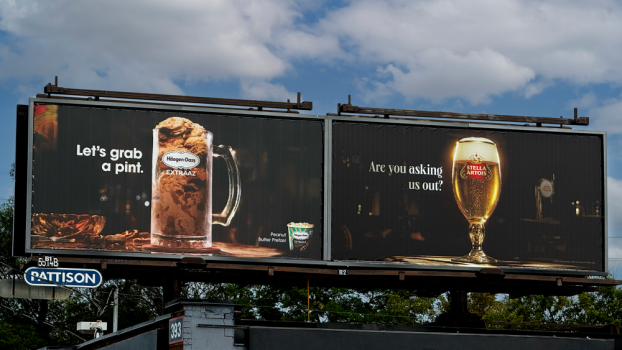
Not anymore. Major U.S. brands are very aware that what’s happening in Times Square, what’s happening in experiential and what’s happening in social are all one story.
They’re looking for an agency that shepherds that entire experience. Not just the billboard. The experiential. The social. The print. Everywhere the brand appears.
They want one unified story, one visual language and one standard.
If you’re a CMO planning for the next three to five years, what should you be looking for in an agency partner?
If I were a CMO, I’d look for agencies with very strong strategy and creative capabilities that can also deliver those ideas at scale under the same roof.
That’s the difficult part of our industry. Creatives weren’t trained to do that. Account managers weren’t trained to be producers. Designers weren’t trained to become creative directors. Producers weren’t trained to become marketers.
It’s a two-way street. Production companies need to understand marketing and long-term brand strategy just as much as agencies need to understand production.
As a CMO, I’m looking for the agency that gets that formula right. Then whether it’s AI, experiential, social or whatever comes next, they’re equipped to respond quickly rather than simply talk about it.
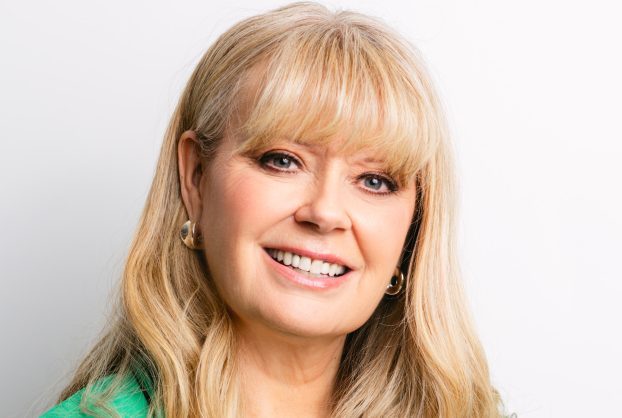
– Image courtesy of Thinkingbox